
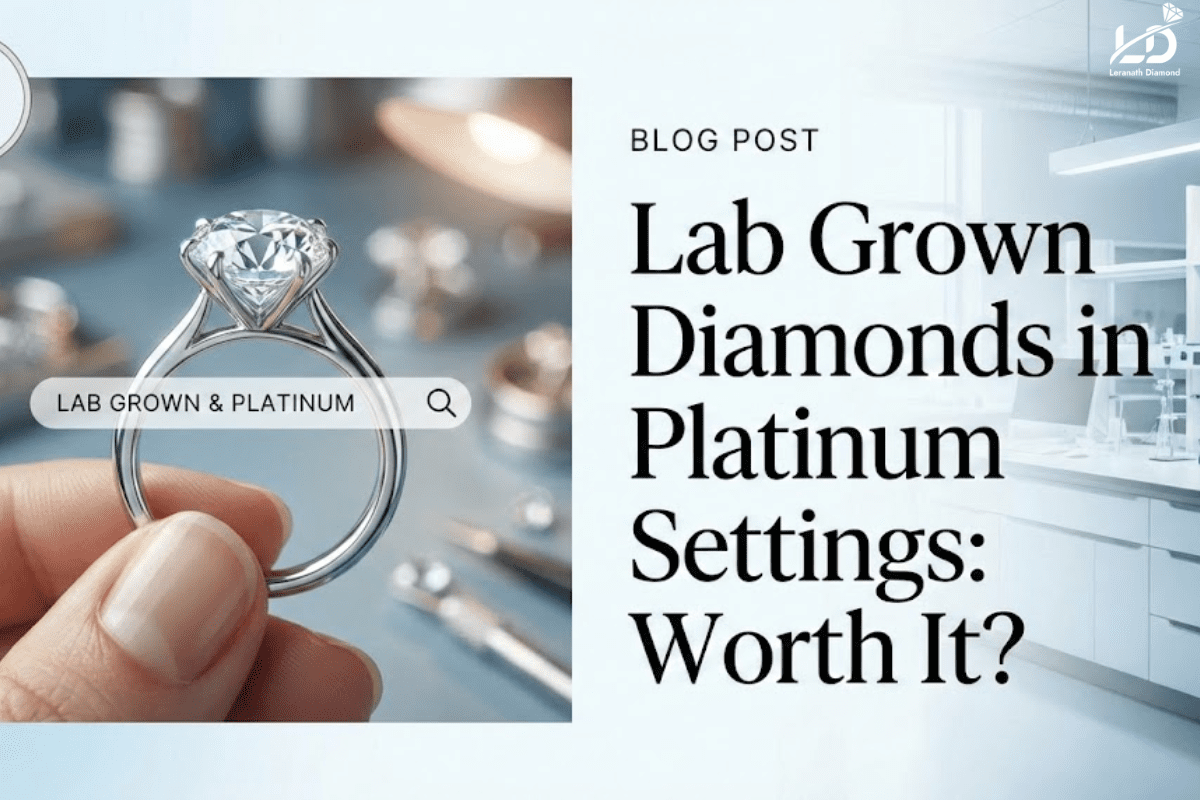
Lab Grown Diamonds in Platinum Settings: Worth It?

If you took a tour through the jewelry stores looking for the ideal piece, you might have noticed that diamonds created in the lab are getting more attractive. When you add platinum, it becomes a partnership that raises up to sublime luxury. But is the high price tag still justified? Let's examine this in a straightforward way. What Are Lab Grown Diamonds? Diamonds grown in labs are genuine diamonds that are produced in well-regulated laboratory conditions rather than taken from places deep down in the earth's surface. They have the same chemical composition, brilliance, and resistance as real diamonds. The only difference? The former are grown in weeks while the latter took millions of years of underground development. An analogy would be ice: no matter if it is formed on a lake naturally or in your freezer, etc., it is still ice. The same story goes for the lab-grown diamonds-they are real diamonds but with a different place of origin. Why Platinum for Settings? Platinum is the topmost of the metals used in the manufacture of jewelry in this regard. It is extremely strong, is white by nature, and will not tarnish or deform due to time. Platinum does not need a constant replating like white gold does but rather keeps its appearance for several decades. This metal is also a skin-friendly type, hence suitable for people who have allergies to metals or other materials. Its weight gives it an edge in securely accommodating stones which is exactly what you would desire for a pricey diamond. The Cost Factor Things are getting very fascinating here. Lab diamonds usually sell for only 20-40% of the price of mined diamonds with the same quality. Such a huge difference in the price! Platinum, on the other hand, is always the most expensive, no matter what diamond you pair with it. Its price is also higher than gold because of its rarity and density. So, on the one hand, you will save a lot on the diamond, but on the other hand, the setting will still require a significant amount of money. To put it differently, the metal that comes with the diamond is one of the finest and at a very low price-the diamond is high-quality. No doubt, this combination represents great worth. Durability and Longevity Both lab-grown diamonds and platinum are very durable and long-lasting. Diamonds are the hardest natural substance and they get a perfect score of 10 on the Mohs hardness scale. Platinum has a superb resistance to wear and tear. The combination of these two materials will produce jewelry that can be inherited age after age. You will not not worry about the metal getting worse or the diamond losing its shine. The Resale Reality Let's be honest: lab grown diamonds don't hold resale value like natural diamonds do. The market for reselling lab diamonds is still developing, and you likely won't recoup much of your investment if you sell later. Natural diamonds also depreciate, but they tend to retain more value. If resale potential matters to you, this is something to consider carefully. However, if you're buying jewelry to wear and enjoy rather than as an investment, this becomes less important. Environmental and Ethical Considerations The environmental footprint of lab-grown diamonds is considerably smaller than that of mining operations. There are no intensive earth excavations or community displacements involved. The issues regarding the morality of mining diamonds-also known as "blood diamonds"-do not apply to diamonds produced in labs. You can be sure of the origin of your diamond that way. Platinum mining does have environmental impacts; however, the metal is often reused in jewelry making, which lessens the impact of mining. Appearance: Can You Tell the Difference? Even with specialized equipment, it is hard for even jewelers to tell lab grown diamonds apart from the natural ones. They are indistinguishable even to ordinary people. The qualities of sparkle, fire, and brilliance are the same. Unless you tell them, your friends will not know. A platinum setting contributes to the combination looking both stunning and luxurious. Who Should Consider This Combination? Lab grown diamonds in platinum settings make sense if you: Want maximum diamond size for your budget Care about environmental and ethical sourcing Plan to keep and wear the jewelry long-term Appreciate quality craftsmanship and materials Don't prioritize resale value This isn't the best choice if you view diamonds primarily as financial investments or if you strongly prefer the traditional appeal of natural diamonds. The Verdict Is a lab-grown diamond in a platinum setting worth it? Well, for most people, the answer is definitely yes. You are still getting a real diamond that is equal in beauty and durability to mined stones at a significantly lower price. The durability of platinum is an added advantage of this luxurious setting. The marriage of quality and value is brilliant. Mainly, the only negative aspect is the limited resale value, which is irrelevant if you are not intending to sell the piece down the line. If you are buying jewelry for an occasion, for self-expression, or to memorialize important events, then lab-grown diamonds in platinum settings are the perfect choice-intelligent and beautiful ones. You get more diamond for less money.
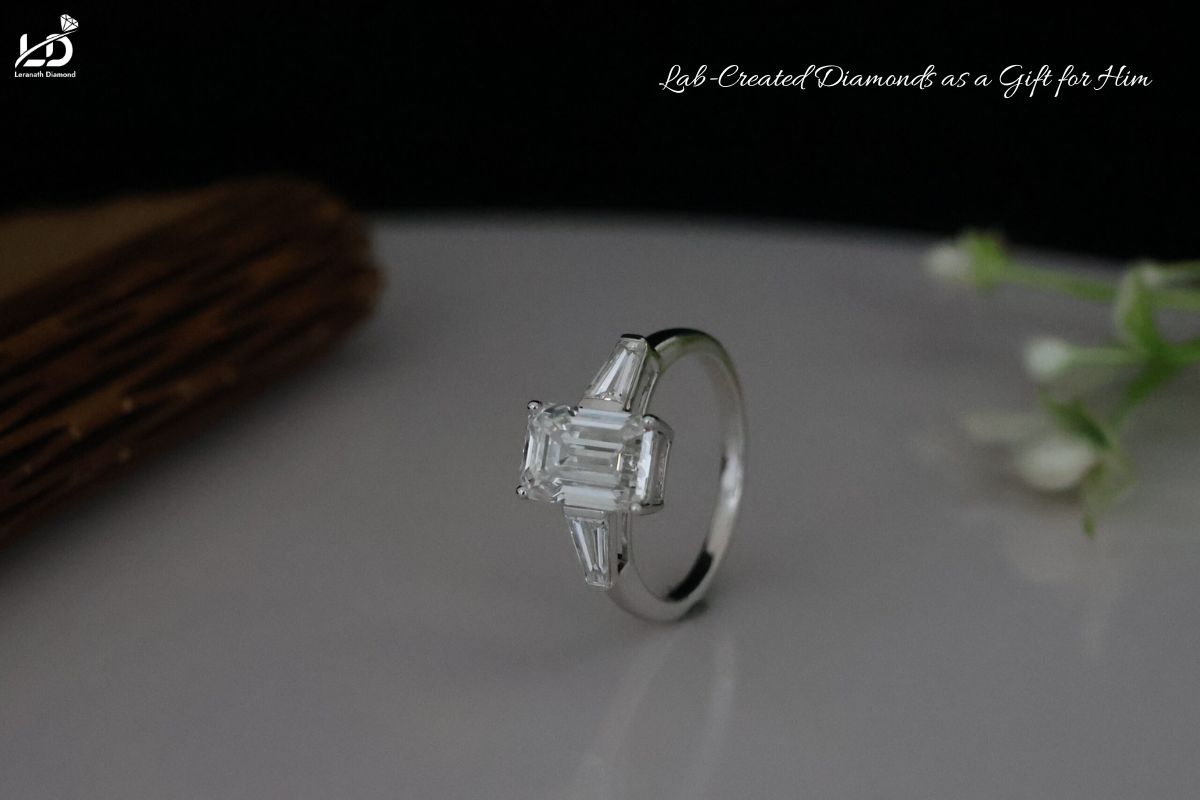
Lab-Created Diamonds as a Gift for Him

For the particular man in your life, when you have to veer towards the right gift, then you definitely want something heartfelt, tasteful, and durable. Man-made diamonds are turning out to be a superior option which embodies the combination of luxury and present-day ethics. Let us present to you the reasons these glimmering stones are the most amazing gift for him! What Are Lab-Created Diamonds? Lab-created diamonds are basically real diamonds that are produced in very precise laboratory conditions through the use of sophisticated technology. They possess all the same characteristics as mined diamonds in terms of physical, chemical, and optical properties. What sets them apart is only the source - one comes from the earth while the other is from a lab. Why Choose Lab-Created Diamonds for Him? 1. Exceptional Value for Money Lab-created diamonds are usually 30-40% cheaper than mined ones. This means that you can buy a bigger or better diamond with the same budget, thus presenting him with an impressive piece without the need for large expenses. 2. Ethical and Sustainable Choice There is a growing trend among modern men to be concerned with the origin of their products. Lab-grown diamonds have a clear-cut supply chain with no issues regarding conflict mining or damage to the environment caused by digging. It is a gift that is in line with the values of a conscious consumer. 3. Same Brilliance, Same Beauty Do not let the term "lab-created" mislead you. Mined diamonds come and lab diamonds have the same chemical structure, thus they emit the same brightness. Even professional gemologists require specialized tools to differentiate them. 4. Perfect for Modern Jewelry Styles Men's jewelry like modern rings, and pendants can be made using lab-grown diamonds similar to how cufflinks are made. They can provide elegance to both types of appearances, i.e. casual and formal. 5. A Symbol of Forward Thinking Opting for lab-created diamonds is tantamount to accepting innovation and the future. It is a present that indicates you appreciate both. Popular Lab-Created Diamond Gifts for Men Cufflinks: Perfect for the professional man who wants to add subtle elegance to his business attire. Rings: Whether it's a wedding band with diamond accents or a statement pinky ring, lab-created diamonds add masculine sophistication. Pendants: A simple diamond pendant on a chain creates a modern, understated look. Watches: Some luxury watches incorporate diamonds in the bezel or dial for extra refinement. Earrings: Small diamond studs have become increasingly popular in men's fashion. How to Choose the Right Piece While picking lab-created diamond jewelry for him, it is important to keep his personal style in mind. Does he go for understated designs or does he want something that makes a bold statement? Generally metals such as silver, white gold, or platinum are most liked by men but yellow and rose gold might be also perfect choices. His lifestyle should also be taken into consideration. If he is a manual worker, then a more robust setting is to be chosen. Elegant cufflinks or a tie pin can be imagined as the ideal for a man in a corporate environment. Making It Special The finest presents come from the heart. When you give him lab-created diamond jewelry, tell him the reason of your selection. Discuss the care and consideration in picking something that is ethical, valuable, and timeless. The tale of the gift adds even more to its significance. Final Thoughts Lab-created diamonds are the ultimate combination of luxury, responsibility, and value. They are not only stunning but also a wise decision that shows the adoption of modern trends. Whether it be an anniversary, birthday celebration, or just a little gesture of appreciation, lab-created diamond jewelry for him will be a gift that lasts and is appreciated for years. In a scenario where the quality is at par with ethics, lab-created diamonds have already won over the aesthetics as they carry the message of being the perfect gift considering not only the person but also the planet.

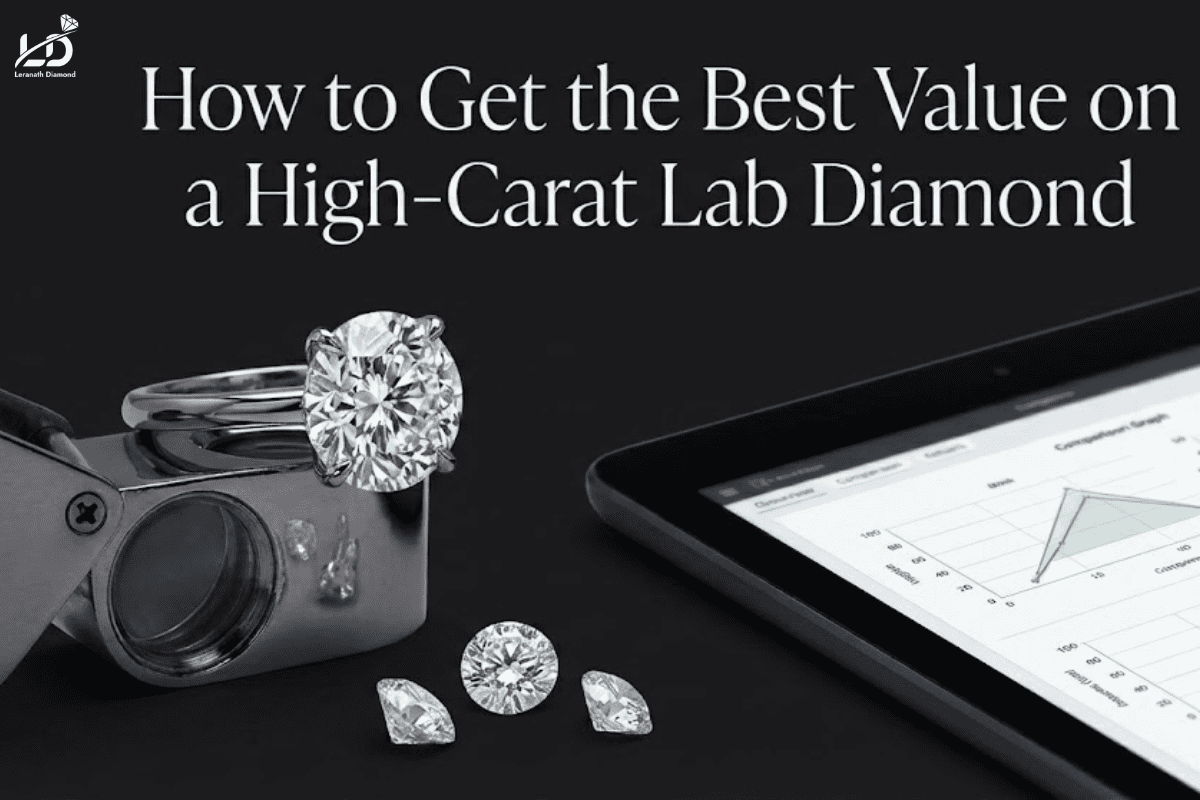
How to Get the Best Value on a High-Carat Lab Diamond

If you are not accustomed to it yet, choosing a high-carat diamond can be a daunting task as you will have to keep an eye on the size, quality, and cost. The introduction of lab-grown diamonds has completely changed the scenario by providing beautiful stones at a price lower than a raw diamond's cost. The question now is, how to ensure that the largest lab diamond you are purchasing is the one with the best possible value? Let’s simplify the process into practical steps. Understanding What Makes Lab Diamonds Affordable Lab-grown diamonds and natural diamonds have the same chemical composition. They contain pure carbon with carbon atoms arranged in the same crystal structure, hence they have the same appearance, brilliance, and life span as the earth-mined ones. But, the only difference is the origin: an artificial environment instead of a natural one. This difference plays a significant role in the costs. Usually, lab diamonds are priced 60–80% less than their mined counterparts of the same weight and quality. If you are purchasing a diamond in the 2-carat, 3-carat, or even larger category, the price difference will be quite noticeable. For example, a 3-carat lab diamond might cost the same as a 1-carat natural diamond with comparable quality. Focus on the Right Quality Factors Not all diamonds are created equal, and understanding the 4 Cs will help you spend your money wisely. Cut Comes First Cut determines how much fire and brilliance your diamond displays A well-cut diamond appears more luminous and attractive than a poorly cut one with similar other characteristics Prioritize excellent or ideal cut grades for best value This is where your diamond gets its "wow factor" The money saved by choosing a lower cut grade is not worth the loss in visual appeal Color: Go Near-Colorless Colorless diamonds (grades D, E, F) are the most expensive Most people cannot distinguish between colorless and near-colorless (G, H, I) grades Choosing a G or H colored diamond offers significant savings No noticeable difference in appearance to the untrained eye Clarity: Nobody Needs Perfection This is where you can achieve the biggest savings Flawless diamonds are beautiful but extremely expensive Inclusions invisible to the naked eye don't affect the diamond's appearance SI1 or SI2 clarity grades are often excellent choices Well-cut stones can hide tiny imperfections with their sparkle Always inspect the diamond personally or request high-quality photos Carat Weight: Shop Smart A 1.9-carat diamond costs considerably less than a 2-carat, but the 0.1-carat difference is undetectable when worn Carat measures weight, not size perception Choose diamonds slightly below popular carat weights for better value Choose the Right Shape for Your Budget Round brilliant diamonds are the most popular, but they're also the most expensive because they require cutting away more rough material. If you're flexible on shape, consider oval, cushion, or emerald cuts. These fancy shapes can be 20-40% less expensive than rounds for the same carat weight, and many people find them even more distinctive and attractive. Get Certified, But Don't Overpay for the Name You should always purchase a diamond that is certified by an excellent grading lab. IGI (International Gemological Institute) and GIA (Gemological Institute of America) are both great when it comes to laboratory diamonds. IGI in particular is now well established in the lab-grown diamond market and gives you the best value for your money with its low-cost grading service, which can lead to savings for you. Avoid diamonds without certification. You need that independent verification to know you're getting what you pay for. Compare Multiple Retailers There is a huge difference between the prices of lab diamonds sold by different vendors. Some online jewelers have a much lower overhead, and they are able to give their customers a better price. Don't make your purchase in the first shop you visit. Try at least three different retailers and don't be afraid to ask if they can match or undercut the price of a competitor on a similar stone. Many retailers also offer virtual appointments where experts can show you diamonds via video call. This is a great way to see exactly what you're getting without visiting multiple stores. Consider Setting Costs Too The overall cost of the diamond will be higher as a larger diamond requires a more substantial setting. If you are really planning to spend the money on a big stone, then it must be that you will be needing a setting that is strong enough to hold it securely. Occasionally, going for a slightly smaller diamond might give the option of investing in a more exquisite setting that will enhance the beauty of the whole look. Timing Can Matter Like many retail items, diamond prices can fluctuate. Shopping during off-peak seasons (avoiding November through February, when engagement ring shopping peaks) might give you more negotiating power. Holiday sales and promotional periods can also offer genuine savings. Ask About Upgrade Programs Some jewelers offer upgrade programs where you can trade in your lab diamond later toward a larger one. If you think you might want to go bigger in the future, this can provide valuable flexibility. Just read the terms carefully to understand any restrictions. The Bottom Line Getting the best value on a high-carat lab diamond comes down to being strategic. Prioritize cut quality above all else, choose near-colorless over colorless, be flexible on clarity, consider shapes other than round, and shop around. Lab diamonds have made it possible to own stunning, large stones without devastating your savings. Remember that the "best" diamond isn't the most expensive one-it's the one that looks beautiful to you and fits comfortably within your budget. With lab diamonds, you can have both size and quality without compromise.

Choosing Between Natural and Manmade Diamonds: A Buyer’s Guide

Throughout history, diamonds have held a special place in human culture. They symbolize commitment, rarity, and permanence. But the jewelry market has transformed. Today's shoppers have an option that didn't exist a generation ago: gemstones grown in facilities versus those extracted from the earth. The two types of diamonds are both real. They are both stunning and durable, exhibiting the same characteristics. But there are also differences in terms of the story behind them, the price, and the influence-so when you recognize these differences, it will be easier for you to choose the one that matches your values and needs. How Two Very Different Diamonds Form The origin of a diamond fundamentally shapes its identity and character. Natural Diamonds re obtained from the deep crust of the Earth. Over a period of approximately three billion years, intense pressure and extremely high temperatures convert carbon into crystal structures under the Earth's crust. Then, geological activity brings these stones closer to the surface where they are found and extracted. Each diamond mined from this process has been around for a long timeβ€”it is a geological specimen that was formed long before humans inhabited the earth. Laboratory-Created Diamonds are produced through various high-tech approaches that imitate the natural process. In specialized laboratories, researchers take carbon materials and apply precise heat and pressure, resulting in diamond formation in a matter of weeks or months. Instead of relying on nature for the slow process of geological transformation, this method uses technology to speed it up and thus mimic nature's work, but only in a much shorter span of time. Is a Lab-Created Diamond Actually a Diamond? Absolutely, without question. From the perspective of science, the diamonds produced in labs and the diamonds obtained from the earth cannot be chemically differentiated. The atomic structure of both the diamonds is composed of carbon atoms arranged in the same way. They have the same hardness, refractive index, and other optical qualities. They are, indeed, equivalent gemstones to the naked eye and under normal jewelry testing. The sole significant difference is the place where they come from. Synthetic diamonds relate to mined diamonds just as manufactured steel relates to naturally mined iron ore. In both cases, it is the same element - carbon - that they are produced from, with the same physical properties, but they just happened to come by different routes. Professional gemologists, as well, are unable to tell a lab diamond from a natural diamond if relying solely on visual inspection. Only the use of specialized laboratory equipment can uncover the very minute growth markers or internal features that indicate the diamond's technological lineage. Side-by-Side Comparison Understanding the practical differences helps clarify which option suits your situation. AspectNatural DiamondLab-Created DiamondCreation ProcessNatural geological formation over billions of yearsTechnological synthesis in laboratory setting, weeks to monthsMaterial CompositionPure carbon crystalline structurePure carbon crystalline structureCostHigher price pointGenerally 40-70% less expensive for equivalent specificationsInvestment PotentialEstablished resale market with some value retentionLimited secondary market, minimal investment returnEnvironmental FootprintMining operations have significant land and ecosystem impactsLower mining impact but substantial energy consumptionDurabilityExtremely hard and scratch-resistantIdentical hardness and durability The most obvious distinction is cost. A laboratory-created diamond of equivalent size and quality typically costs substantially less, allowing buyers to either save money or allocate their budget toward a larger or higher-quality stone. Making Your Decision: Which Type Fits Your Needs? The right choice depends entirely on what matters most to you personally. Consider a Natural Diamond if: You are intrigued by the tale of rarity through geological processes. The thought that your diamond was formed in the earth's core millions of years ago, went through the volcanic processes and time still carries with it a great deal of resonance for you. You give priority to the traditional way of investment and the possibility of appreciation. The physical market image and the historical importance belonging to diamonds from the ground are your preferences. To your decision making, the fact that the "Earth-sourced" stones are genuine is a very important point. Consider a Lab-Created Diamond if: Your most crucial aim is to get the best quality and the biggest stone possible within your budget. You are not afraid to sacrifice the investment aspect for the sake of the visual effect. You are worried about the mining methods and their impact on nature. The scientific miracle of producing diamonds is something that you find intellectually appealing. You consider the economical aspect-getting more diamond for less price-more important than the historical Final Thoughts Whether you select a diamond that emerged from Earth's depths or one synthesized in a modern facility, you're acquiring a genuine, brilliant, durable gemstone. Your decision reflects your values, financial situation, and what a diamond means to you personally. The key is making an informed choice. Purchase from a jeweler who provides transparent documentation about your diamond's origin and specifications. Whether your stone is mined or laboratory-created, proper certification ensures you understand exactly what you're acquiring and can shop with confidence. Your perfect diamond is waitingβ€”choose the one that aligns with what matters most to you.
Back to Top
Send Inquiry
Product has been added to your cart