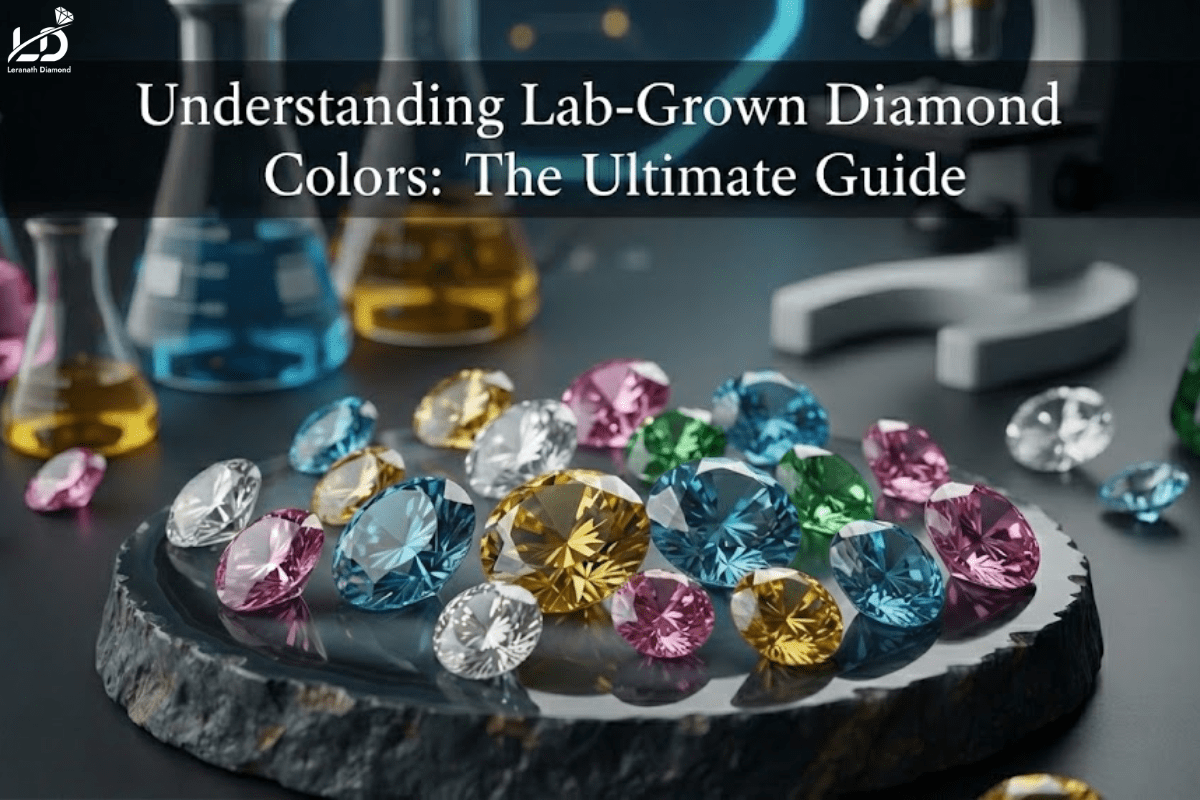
Understanding Lab-Grown Diamond Colors: The Ultimate Guide

When buying lab-grown diamonds, colour is one of the biggest influences on both the look and the price. Knowing how colour works with lab-grown diamonds can help you find the right diamond whether you want a classic white diamond or an eye-catching fancy coloured diamond. What Are Lab-Grown Diamonds? Lab-grown diamonds are actual diamonds manufactured in laboratories where diamond conditions are artificially created. Lab-grown diamonds have the same properties as natural diamonds: the same chemical composition, the same crystal shape, and the same optical properties. The only difference is that a natural diamond takes millions to billions of years to form, whereas lab-grown diamonds develop within weeks via advanced technology. The Color Grading Scale Most people think of diamonds as colorless, but they actually come in a range of shades. The Gemological Institute of America (GIA) grades white diamonds on a scale from D to Z. D-F (Colorless): White diamonds grades D-F are considered colourless, and are considered the rarest and most expensive type of diamond because they are completely void of any colour. Even an expert gemologist would have difficulty identifying the slight colour difference between D, E, and F grades when the stones are viewed individually. G-J (Near Colorless): These stones have slight traces of color that are difficult to detect with the naked eye, especially when set in jewelry. They offer excellent value because the color difference is minimal but the price drop is significant. K-M (Faint Color): Warm tinting begins to show in some instances, and this can often be the most preferred coloration by consumers compared to the grades above K-M. N-Z (Very Light to Light Color): Light yellows and light browns are visible in these shapes, but do not tend to be selected as "Engagement Rings" and they generally have a lower price than those of higher grades. How Lab-Grown Diamonds Get Their Color The color in diamonds comes from trace elements or structural changes during formation. iamonds created in laboratories may exhibit colored hues that occur in two manners: either naturally from incorporating nitrogen atoms during their formation, or purposefully created by controlling the various chemical elements present for growth. For white diamonds, producers use special purification techniques to minimize nitrogen and other impurities that cause color. The better they control the environment, the more colorless the resulting diamond. Fancy Colored Lab-Grown Diamonds In addition to the typical D-Z diamond grading system, fancy colored diamonds are graded according to their intensity and purity, such as vivid blue, pink, yellow, green, and even red. Yellow Diamonds: Nitrogen is present when yellow diamonds are formed, so lab-made yellow diamonds are more prevalent and less expensive than other shades. Blue Diamonds: When boron is introduced to the growth process, blue diamonds are formed. Lab-grown blue diamonds are gorgeous and more readily available than natural blue diamonds, which are extremely difficult to locate. Pink Diamonds: Natural pink diamonds are one of the most elusive of all precious stones, so the lab-grown variety is immensely appealing because they can be produced either by treating the stone after growth or during the growth process. Green Diamonds: Green diamonds can be produced by exposing them to controlled doses of radiation throughout the growth cycle or after the growth process has finished. The shades of green can vary from light mint to dark forest green. Red and Orange Diamonds: Rarely, orange and red diamonds occur in nature; however, because of technological advances in growing conditions and treatment techniques, red and orange diamonds can be produced in a controlled environment. Choosing the Right Color for You Your choice should balance personal preference, budget, and the setting you plan to use. For engagement rings with white metal settings like platinum or white gold, aim for at least H-I color. Higher grades won't show much visible difference, but lower grades may display a yellowish tint against the bright metal. If you're using yellow or rose gold, you can comfortably choose J-K colors or even lower. The warm metal actually complements the diamond's warmth, making the color less noticeable. Size matters too. Compared to lesser diamonds, larger diamonds exhibit color more readily. If you're buying a stone over two carats, consider moving up one or two color grades. The Price Advantage One of the biggest benefits of lab-grown diamonds is the price difference across color grades. You can often afford to move up several color grades compared to natural diamonds for the same budget. A near-colorless lab-grown diamond might cost the same as a faint-color natural diamond. This means you can prioritize getting a truly colorless stone without breaking the bank, or choose to allocate your budget toward size or clarity instead. Color vs. Other Quality Factors Remember that color is just one of the "Four Cs"- cut, color, clarity, and carat weight. A well-cut diamond with slightly lower color can appear more brilliant than a poorly cut diamond with perfect color. The diamond's cut dictates how light passes through it, producing fire and glitter. Many experts argue that cut quality matters more than color grade for overall beauty. A diamond with excellent proportions will maximize brilliance and can make subtle color variations virtually invisible. Common Misconceptions Myth: Lab diamonds are all perfectly colorless. Reality: Lab-grown diamonds come in the same color range as natural diamonds. Creating truly colorless diamonds requires sophisticated control and purification techniques. Myth: Color doesn't matter if the diamond sparkles. Reality: While sparkle is important, color affects the overall appearance, especially in larger stones or white metal settings. Myth: Fancy colored lab diamonds are "fake" colors. Reality: The color in fancy lab-grown diamonds comes from the same causes as in natural diamondsβ€”trace elements and structural characteristics. Making Your Decision Start by looking at several diamonds in your target color range. See them in person if possible, or request high-quality photos and videos from online retailers. Your eyes are the best judge of what looks good to you. Consider your setting and lifestyle. Will you wear your diamond daily? What metal color do you prefer? How important is size versus absolute perfection? Set a realistic budget that accounts for all the quality factors you care about. Lab-grown diamonds give you flexibility to maximize what matters most to you without compromising on what you can afford. Final Thoughts Understanding diamond color helps you make an informed choice that balances beauty, quality, and value. Lab-grown diamonds offer an opportunity to get excellent color grades at accessible prices, or to explore fancy colors that would be prohibitively expensive in natural stones. The perfect diamond is the one that makes you happy when you look at it. Whether that's a pristine colorless stone or a vibrant fancy color, lab-grown technology makes it easier than ever to find exactly what you want.
7 Things You Didn’t Know About Diamonds

When you see a diamond, most likely you envision a diamond ring or other forms of jewelry that signify wealth/luxury. However, diamonds are much more than just beautiful stones. Here are some intriguing diamond facts that may change your perspective on diamonds forever. 1. Diamonds Are Actually Really Old (Like, Ancient) The majority of the diamonds in your local jewelry store were created over 1 billion - 3 billion years ago. Yes, now you understand that the diamond in your grandmother's ring is likely older than the dinosaurs (roughly 65 million years before the dinosaurs existed). Most diamonds were created deep beneath the Earth's crust at a depth of approximately 100 miles where they were subjected to intense heat and pressure prior to their creation. The diamonds were eventually returned to the earth's surface due to a volcanic eruption, allowing people to find them. 2. Not All Diamonds Are Clear Most people think of clear, colourless diamonds when they think of diamonds. However, diamonds can be found in virtually every color. Diamonds can be pink, blue, yellow, and even red, which is one of the rarest forms of coloured diamond. The different colors occur due to small amounts of impurities within the crystal or because of different ways the diamond was formed, as in the case of blue diamonds, which contain boron, and yellow diamonds, which contain nitrogen. Some of these coloured diamonds are also worth much more than their clear counterparts. 3. Diamonds Aren't Actually Forever The famous slogan "A Diamond Is Forever" is catchy, but it's not entirely accurate. Diamonds can burn. If you heat a diamond to about 763 degrees Celsius in the presence of oxygen, it will catch fire and turn into carbon dioxide. They can also chip or crack if hit at the right angle. So while they're incredibly hard, they're not indestructible. 4. Most Diamonds Never Become Jewelry Here's something that surprised me: only about 20% of mined diamonds are good enough quality to become gemstones. The rest are used for industrial purposes. Because diamonds are the hardest natural material on Earth, they're perfect for cutting, grinding, and drilling tools. Your dentist's drill probably has diamond bits in it. 5. There's a Planet Made of Diamonds Astronomers discovered a planet called 55 Cancri e that's roughly twice the size of Earth. Scientists believe a significant portion of this planet could be made of diamond. Due to the extreme heat and pressure present on this planet, it is believed that carbon has been converted into diamonds. It lies approximately 40 light-years distant, so it would be unwise to contemplate a mining expedition at this moment. 6. Lab-Grown Diamonds Are Real Diamonds Lab-created diamonds are often mistaken for being fake or at least of inferior quality. This is NOT correct, as lab-created diamonds have exactly the same chemical composition, crystal structure, and all of the same physical properties as a natural diamond.The only difference in the two types of diamond is the location in which they were formed - lab-created diamonds are formed in a laboratory during a matter of weeks to months while natural diamonds were formed within the interior of the Earth over billions of years. Even jewelers who specialize in the industry need very specific equipment in order to recognize the difference between lab-created and natural diamonds. 7. Diamonds Rain on Jupiter and Saturn According to scientists, it's possible that Jupiter and Saturn have "diamond rain" as a result of methane in their atmosphere being created by lightning storms. When a lightning storm occurs, methane molecules break down, creating carbon atoms that are then formed under extreme pressure into diamond droplets, or "raindrops," that fall towards their cores. Some of these diamonds can be as large as 1 cm. Pretty cool, right? Final Thoughts People have long been fascinated with diamonds, and many reasons exist to explain this fascination. A few examples are: diamonds tell the story of Earth's history, allow exploration of new technology, and can exist outside of Earth. So, when you catch sight of that glittery, shiny diamond again, remember that it has far more meaning than something that looks good! Diamond are an excellent example of how creative and inventive nature can be! And, who knows? Someday we might find a way to capture the diamond rain of Saturn!

How Does the Cut of a Lab-Grown Diamond Impact Its Sparkle

The "4Cs"-carat, color, clarity, and cut-will be discussed when looking for a lab-grown diamond. However, most people are unaware that the most important component of diamond sparkle is cut. What Is Diamond Cut? The word "cut" and the diamond's form might undoubtedly be misunderstood.(round, princess, oval) "cut" here denotes the diamond's proportions, symmetry, and polish- in other words, how the stone has been crafted to the light performance. The Science of Sparkle Light behaves in a certain way inside a diamond and it is because of that the diamond sparkles. A diamond with a good cut is able to reflect light internally and emit it via the top thus the sparkling effect is created. A diamond that is cut too shallow or too deep will let the light go through the bottom or the sides and thus will be dull and lifeless. Diamond sparkle has three components: Brilliance: White light reflected back to your eye Fire: Colorful flashes and rainbow effects Scintillation: The pattern of light and dark areas that shift as the diamond moves Why Cut Matters More Than Size So, here is the interesting fact: the sparkle of a smaller, well-cut diamond will be greater than that of a bigger, poorly-cut one. It will be a 1-carat diamond with an Excellent cut that will emit more light than a 1.5-carat diamond with a Good cut and that is because it will be more eye-catching so it will actually look larger. Cut Grades Explained Excellent/Ideal: Maximum brilliance, reflects nearly all light Very Good: Reflects most light, slightly less precise Good: Decent sparkle but noticeably less brilliant Fair/Poor: Significant light leakage, dull appearance Lab-Grown Diamond Advantage Diamonds created in the laboratories hold great potential to the future of the industry. Because they are produced under controlled conditions, the raw material is generally cleaner and more uniform, thus it is easier to achieve better cuts. Additionally, as lab diamonds are cheaper than natural ones, you can put more emphasis on the quality of the cut without going over your budget. Shopping Tips Always request certification and check the cut grade Don't let carat weight be your primary decision factor Compare diamonds side by side in different lighting Trust your reaction-a perfectly cut diamond will grab your attention immediately The Bottom Line Color and clarity are important, but cannot improve a bad cut. With lab-grown diamonds, you can buy the best quality cut, which most influences the diamond's beauty. Ultimately, you are buying the emotional sparkles it provides. Cut is nothing but a factor that determines β€‹β€β€‹β€Œβ€β€‹β€β€Œβ€‹β€β€‹β€Œβ€β€‹β€β€Œthat.

Lab Grown Diamond Earrings 2 Carat: A Complete Guide

Are you considering the purchase of a magnificent pair of 2-carat diamond earrings? Lab-grown diamonds present an attractive option that mixes aesthetics with ethics and cost. Let's dive into the world of these brilliant stones and see what you really need to know. What Are Lab Grown Diamonds? Lab-grown diamonds are actual diamonds made in controlled lab settings instead of from the earth's crust. They possess the same chemical makeup, crystal structure, and physical properties as natural diamonds. Just their origin becomes the sole difference pullout. The diamond creation scene has two major techniques: High Pressure High Temperature (HPHT) or Chemical Vapor Deposition (CVD). Both resemble the natural conditions that produce diamonds underground, yet this happens in a significantly shorter period. Why Choose 2 Carat Lab Grown Diamond Earrings? The Perfect Size A total of two carats (which are mostly 1 carat per ear) is the best weight. The size is large enough to be noticed and at the same time not too loud for everyday use. A size like this will also get the light in a wonderful way and create a very charming effect on your outfit. Exceptional Value This is the main forte of lab-grown diamonds. Usually, going for a lab-grown diamond will cost you only 40-70% of what you would spend on mined diamonds with the same quality. So, a tighter budget can allow bigger and better quality stones. The extra money can go towards the betterment of the other factors like clarity, color, or even the setting. Ethical and Sustainable Lab-grown diamonds do away with the uncertainties surrounding the mining industry. There are no land disruptions, no labor conditions that are questionable, and a greatly reduced environmental impact. For the eco-friendly consumer, this peace of mind is worth a lot. Understanding the 4 Cs for Your Earrings Cut Quality A diamond's beauty substantially depends on its cut. The round brilliant cut is the most favored for earrings as it optimally returns light. However, other cuts like princess, cushion, and oval may also be options. Look for cuts graded "Excellent" or "Very Good." Color Grade Diamonds are categorized in colors starting from D (colorless) up to Z (light yellow). For 2 carat earrings, the best colors are in the middle of the scale from D to H. These are the colors that are imperceptible to the naked eye and therefore can be easily put on in any type of setting. Picking lower grades means accepting less whiteness, especially in larger stones. Clarity Level Clarity refers to internal imperfections called inclusions. For earrings, you can comfortably choose VS1 or VS2 grades. Since earrings are viewed from a distance, minor inclusions invisible to the naked eye won't affect their beauty. This is a smart place to save money without sacrificing appearance. Carat Weight You expect to have a 2-carat total weight, so you should plan to get 1 carat per earring. The size of the stones should match very well because earrings that are uneven in size will be too obvious when worn. Popular Settings and Styles Classic Studs Four-prong or six-prong settings are the best all-time choices. They not only fix the diamonds but also allow the maximum light to come through. Martini settings sit lower on the ear and thus give a modern, sleek look. Halo Designs The idea of a halo set with smaller diamonds around the center stone is to add to the stone's sparkle and also to help the diamonds look bigger. This design gives a touch of vintage elegance. Bezel Settings Bezel settings are the ideal choice for people with a very active lifestyle as they provide the maximum possible security to the diamond by surrounding its edge with the metal. They also have a modern, streamlined look. Metal Choices Platinum and white gold are quite popular because they possess the ability to further the brilliance of diamonds. The use of yellow gold and rose gold gives the appearance of warmth and romanticism. Shopping Smart: What to Look For Certification Matters The recommended course of action is to only buy certified diamonds. Among grading laboratories, IGI (International Gemological Institute), GIA (Gemological Institute of America), and GCAL are the ones that come to mind. The certificates confirm the diamond's properties and protect you from shortchanging. Compare Prices The prices of lab-grown diamonds are different from one retailer to another. Look for the best deal and do not ignore to include the costs for setting and any customization. Return Policies Retailers that have longer return policies are the ones to be selected. That way, you will be able to meet the earrings personally and to know whether or not they are what you expected. Lifetime Warranties Many trustworthy retailers provide warranties against labor defects. Cleaning, inspecting, and tightening the prong services might be included at no cost as well. Caring for Your Investment Lab grown diamonds are just as durable as natural diamonds, rating 10 on the Mohs hardness scale. However, proper care keeps them sparkling: Warm water, mild soap, and soft brush should be used for regular cleaning. In order to avoid being scratched, store in a fabric-lined jewelry box or pouch. Take off earrings while exercising or doing housework. Get the settings checked yearly by a jeweler to make sure the prongs are still tight. Keep diamonds away from strong chemicals and high temperatures. Common Questions Answered Can jewelers tell the difference? Skilled and experienced professionals find it challenging to distinguish between natural and lab-grown diamonds even if they are aided by sophisticated tools. It is necessary to conduct tests in order to expose the characteristic growth patterns indicative of the synthetic process. Do they lose value over time? Just like any other jewelry, diamonds' prices vary through depreciation from the initial retail price. On the other hand, lab-grown diamonds come from lower-priced segments, which means you have less investment at the beginning. They will always be beautiful and keep their physical properties. Are they really as sparkly? The answer is yes. The optical properties of lab-grown diamonds are the same as those of their natural counterparts. The fire, brilliance, and scintillation they possess are not even close to each other. What about insurance?Insure your lab-grown diamond earrings the same way as natural ones. Most insurance companies will include them in their appraised value. It is essential to keep all documents and receipts for claims. Making Your Decision Two carat lab grown diamond earrings offer luxury that's accessible and responsible. They're perfect for: Anniversary or milestone gifts Wedding jewelry for brides or bridal parties Graduation or achievement celebrations Everyday elegance Building a versatile jewelry collection The combination of significant size, brilliant sparkle, ethical sourcing, and exceptional value makes them an increasingly popular choice for modern jewelry lovers. Final Thoughts Lab grown diamond earrings represent the future of fine jewelry. They deliver the timeless beauty and durability of diamonds while aligning with contemporary values around sustainability and fair pricing. A 2 carat pair provides that perfect balance of presence and wearability. Whether you treat yourself or shop for someone special, these earrings provide a smart investment in style that will be treasured for years to come. Take your time researching, compare options carefully, and choose certified diamonds from reputable retailers. Your perfect pair is out there waiting to sparkle on you.

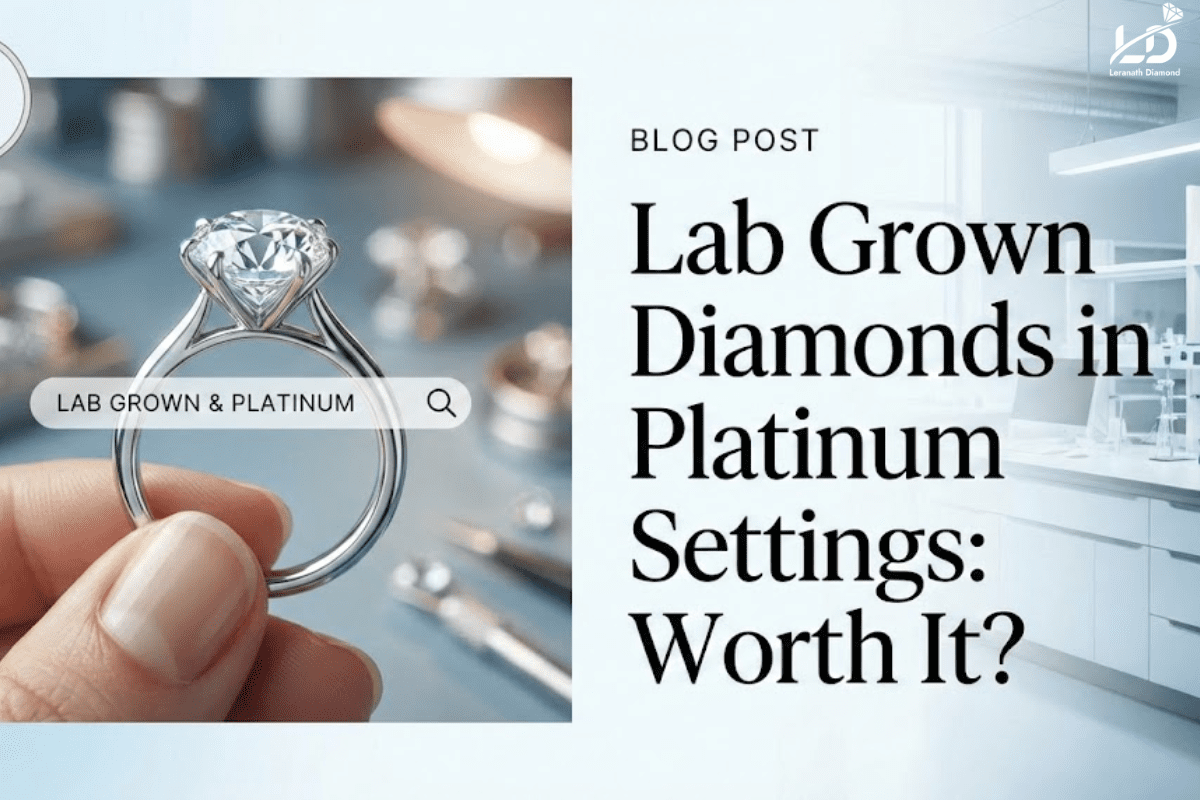
Lab Grown Diamonds in Platinum Settings: Worth It?

If you took a tour through the jewelry stores looking for the ideal piece, you might have noticed that diamonds created in the lab are getting more attractive. When you add platinum, it becomes a partnership that raises up to sublime luxury. But is the high price tag still justified? Let's examine this in a straightforward way. What Are Lab Grown Diamonds? Diamonds grown in labs are genuine diamonds that are produced in well-regulated laboratory conditions rather than taken from places deep down in the earth's surface. They have the same chemical composition, brilliance, and resistance as real diamonds. The only difference? The former are grown in weeks while the latter took millions of years of underground development. An analogy would be ice: no matter if it is formed on a lake naturally or in your freezer, etc., it is still ice. The same story goes for the lab-grown diamonds-they are real diamonds but with a different place of origin. Why Platinum for Settings? Platinum is the topmost of the metals used in the manufacture of jewelry in this regard. It is extremely strong, is white by nature, and will not tarnish or deform due to time. Platinum does not need a constant replating like white gold does but rather keeps its appearance for several decades. This metal is also a skin-friendly type, hence suitable for people who have allergies to metals or other materials. Its weight gives it an edge in securely accommodating stones which is exactly what you would desire for a pricey diamond. The Cost Factor Things are getting very fascinating here. Lab diamonds usually sell for only 20-40% of the price of mined diamonds with the same quality. Such a huge difference in the price! Platinum, on the other hand, is always the most expensive, no matter what diamond you pair with it. Its price is also higher than gold because of its rarity and density. So, on the one hand, you will save a lot on the diamond, but on the other hand, the setting will still require a significant amount of money. To put it differently, the metal that comes with the diamond is one of the finest and at a very low price-the diamond is high-quality. No doubt, this combination represents great worth. Durability and Longevity Both lab-grown diamonds and platinum are very durable and long-lasting. Diamonds are the hardest natural substance and they get a perfect score of 10 on the Mohs hardness scale. Platinum has a superb resistance to wear and tear. The combination of these two materials will produce jewelry that can be inherited age after age. You will not not worry about the metal getting worse or the diamond losing its shine. The Resale Reality Let's be honest: lab grown diamonds don't hold resale value like natural diamonds do. The market for reselling lab diamonds is still developing, and you likely won't recoup much of your investment if you sell later. Natural diamonds also depreciate, but they tend to retain more value. If resale potential matters to you, this is something to consider carefully. However, if you're buying jewelry to wear and enjoy rather than as an investment, this becomes less important. Environmental and Ethical Considerations The environmental footprint of lab-grown diamonds is considerably smaller than that of mining operations. There are no intensive earth excavations or community displacements involved. The issues regarding the morality of mining diamonds-also known as "blood diamonds"-do not apply to diamonds produced in labs. You can be sure of the origin of your diamond that way. Platinum mining does have environmental impacts; however, the metal is often reused in jewelry making, which lessens the impact of mining. Appearance: Can You Tell the Difference? Even with specialized equipment, it is hard for even jewelers to tell lab grown diamonds apart from the natural ones. They are indistinguishable even to ordinary people. The qualities of sparkle, fire, and brilliance are the same. Unless you tell them, your friends will not know. A platinum setting contributes to the combination looking both stunning and luxurious. Who Should Consider This Combination? Lab grown diamonds in platinum settings make sense if you: Want maximum diamond size for your budget Care about environmental and ethical sourcing Plan to keep and wear the jewelry long-term Appreciate quality craftsmanship and materials Don't prioritize resale value This isn't the best choice if you view diamonds primarily as financial investments or if you strongly prefer the traditional appeal of natural diamonds. The Verdict Is a lab-grown diamond in a platinum setting worth it? Well, for most people, the answer is definitely yes. You are still getting a real diamond that is equal in beauty and durability to mined stones at a significantly lower price. The durability of platinum is an added advantage of this luxurious setting. The marriage of quality and value is brilliant. Mainly, the only negative aspect is the limited resale value, which is irrelevant if you are not intending to sell the piece down the line. If you are buying jewelry for an occasion, for self-expression, or to memorialize important events, then lab-grown diamonds in platinum settings are the perfect choice-intelligent and beautiful ones. You get more diamond for less money.

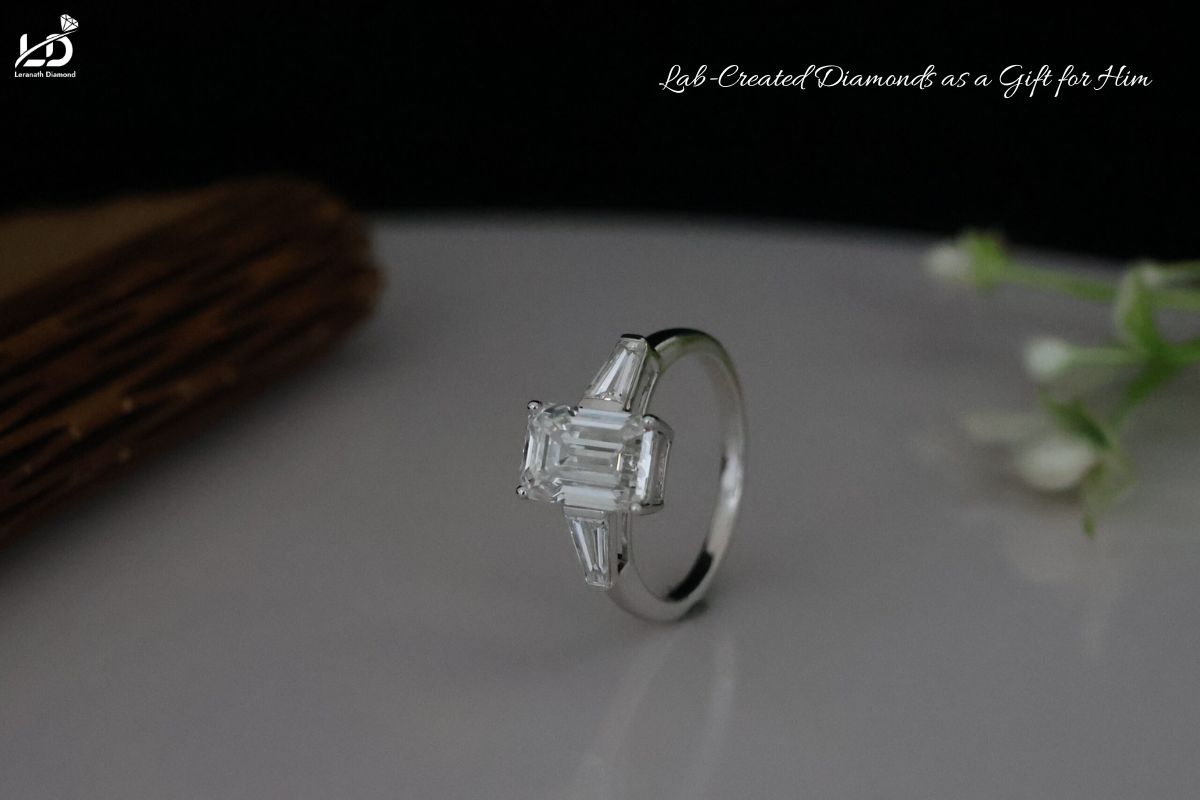
Lab-Created Diamonds as a Gift for Him

For the particular man in your life, when you have to veer towards the right gift, then you definitely want something heartfelt, tasteful, and durable. Man-made diamonds are turning out to be a superior option which embodies the combination of luxury and present-day ethics. Let us present to you the reasons these glimmering stones are the most amazing gift for him! What Are Lab-Created Diamonds? Lab-created diamonds are basically real diamonds that are produced in very precise laboratory conditions through the use of sophisticated technology. They possess all the same characteristics as mined diamonds in terms of physical, chemical, and optical properties. What sets them apart is only the source - one comes from the earth while the other is from a lab. Why Choose Lab-Created Diamonds for Him? 1. Exceptional Value for Money Lab-created diamonds are usually 30-40% cheaper than mined ones. This means that you can buy a bigger or better diamond with the same budget, thus presenting him with an impressive piece without the need for large expenses. 2. Ethical and Sustainable Choice There is a growing trend among modern men to be concerned with the origin of their products. Lab-grown diamonds have a clear-cut supply chain with no issues regarding conflict mining or damage to the environment caused by digging. It is a gift that is in line with the values of a conscious consumer. 3. Same Brilliance, Same Beauty Do not let the term "lab-created" mislead you. Mined diamonds come and lab diamonds have the same chemical structure, thus they emit the same brightness. Even professional gemologists require specialized tools to differentiate them. 4. Perfect for Modern Jewelry Styles Men's jewelry like modern rings, and pendants can be made using lab-grown diamonds similar to how cufflinks are made. They can provide elegance to both types of appearances, i.e. casual and formal. 5. A Symbol of Forward Thinking Opting for lab-created diamonds is tantamount to accepting innovation and the future. It is a present that indicates you appreciate both. Popular Lab-Created Diamond Gifts for Men Cufflinks: Perfect for the professional man who wants to add subtle elegance to his business attire. Rings: Whether it's a wedding band with diamond accents or a statement pinky ring, lab-created diamonds add masculine sophistication. Pendants: A simple diamond pendant on a chain creates a modern, understated look. Watches: Some luxury watches incorporate diamonds in the bezel or dial for extra refinement. Earrings: Small diamond studs have become increasingly popular in men's fashion. How to Choose the Right Piece While picking lab-created diamond jewelry for him, it is important to keep his personal style in mind. Does he go for understated designs or does he want something that makes a bold statement? Generally metals such as silver, white gold, or platinum are most liked by men but yellow and rose gold might be also perfect choices. His lifestyle should also be taken into consideration. If he is a manual worker, then a more robust setting is to be chosen. Elegant cufflinks or a tie pin can be imagined as the ideal for a man in a corporate environment. Making It Special The finest presents come from the heart. When you give him lab-created diamond jewelry, tell him the reason of your selection. Discuss the care and consideration in picking something that is ethical, valuable, and timeless. The tale of the gift adds even more to its significance. Final Thoughts Lab-created diamonds are the ultimate combination of luxury, responsibility, and value. They are not only stunning but also a wise decision that shows the adoption of modern trends. Whether it be an anniversary, birthday celebration, or just a little gesture of appreciation, lab-created diamond jewelry for him will be a gift that lasts and is appreciated for years. In a scenario where the quality is at par with ethics, lab-created diamonds have already won over the aesthetics as they carry the message of being the perfect gift considering not only the person but also the planet.

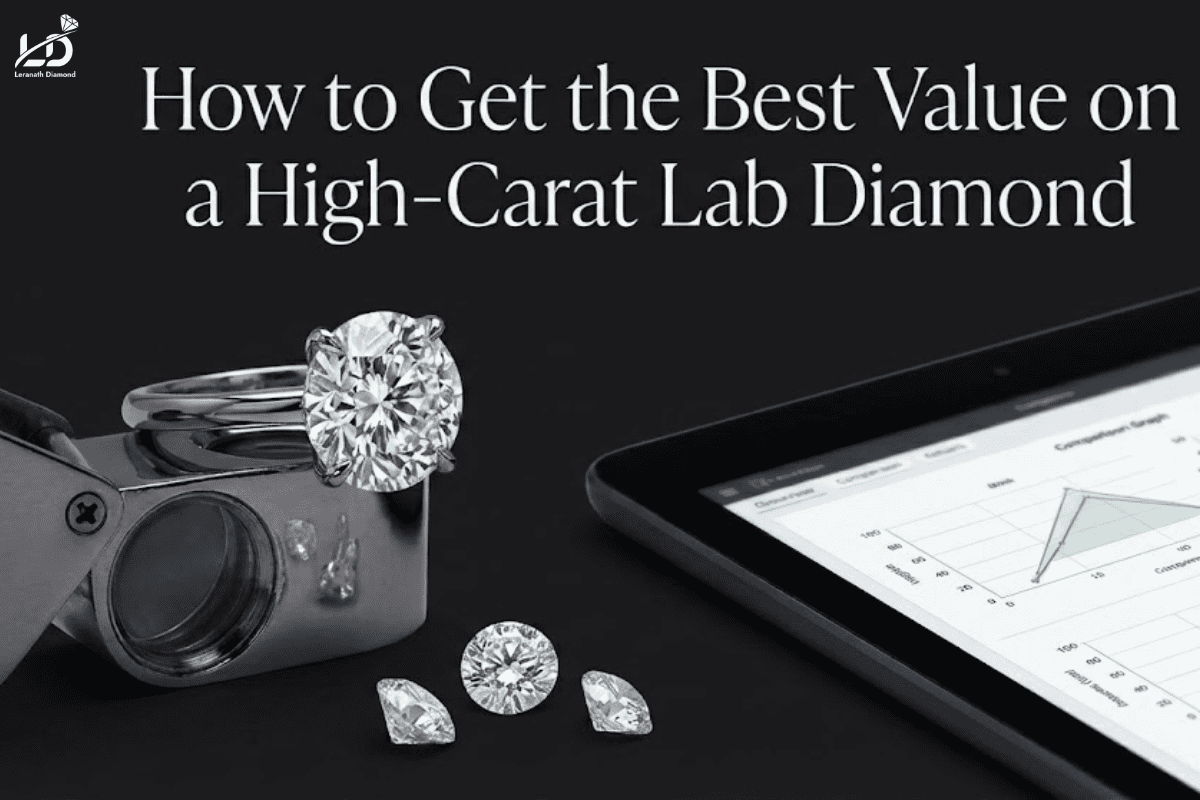
How to Get the Best Value on a High-Carat Lab Diamond

If you are not accustomed to it yet, choosing a high-carat diamond can be a daunting task as you will have to keep an eye on the size, quality, and cost. The introduction of lab-grown diamonds has completely changed the scenario by providing beautiful stones at a price lower than a raw diamond's cost. The question now is, how to ensure that the largest lab diamond you are purchasing is the one with the best possible value? Let’s simplify the process into practical steps. Understanding What Makes Lab Diamonds Affordable Lab-grown diamonds and natural diamonds have the same chemical composition. They contain pure carbon with carbon atoms arranged in the same crystal structure, hence they have the same appearance, brilliance, and life span as the earth-mined ones. But, the only difference is the origin: an artificial environment instead of a natural one. This difference plays a significant role in the costs. Usually, lab diamonds are priced 60–80% less than their mined counterparts of the same weight and quality. If you are purchasing a diamond in the 2-carat, 3-carat, or even larger category, the price difference will be quite noticeable. For example, a 3-carat lab diamond might cost the same as a 1-carat natural diamond with comparable quality. Focus on the Right Quality Factors Not all diamonds are created equal, and understanding the 4 Cs will help you spend your money wisely. Cut Comes First Cut determines how much fire and brilliance your diamond displays A well-cut diamond appears more luminous and attractive than a poorly cut one with similar other characteristics Prioritize excellent or ideal cut grades for best value This is where your diamond gets its "wow factor" The money saved by choosing a lower cut grade is not worth the loss in visual appeal Color: Go Near-Colorless Colorless diamonds (grades D, E, F) are the most expensive Most people cannot distinguish between colorless and near-colorless (G, H, I) grades Choosing a G or H colored diamond offers significant savings No noticeable difference in appearance to the untrained eye Clarity: Nobody Needs Perfection This is where you can achieve the biggest savings Flawless diamonds are beautiful but extremely expensive Inclusions invisible to the naked eye don't affect the diamond's appearance SI1 or SI2 clarity grades are often excellent choices Well-cut stones can hide tiny imperfections with their sparkle Always inspect the diamond personally or request high-quality photos Carat Weight: Shop Smart A 1.9-carat diamond costs considerably less than a 2-carat, but the 0.1-carat difference is undetectable when worn Carat measures weight, not size perception Choose diamonds slightly below popular carat weights for better value Choose the Right Shape for Your Budget Round brilliant diamonds are the most popular, but they're also the most expensive because they require cutting away more rough material. If you're flexible on shape, consider oval, cushion, or emerald cuts. These fancy shapes can be 20-40% less expensive than rounds for the same carat weight, and many people find them even more distinctive and attractive. Get Certified, But Don't Overpay for the Name You should always purchase a diamond that is certified by an excellent grading lab. IGI (International Gemological Institute) and GIA (Gemological Institute of America) are both great when it comes to laboratory diamonds. IGI in particular is now well established in the lab-grown diamond market and gives you the best value for your money with its low-cost grading service, which can lead to savings for you. Avoid diamonds without certification. You need that independent verification to know you're getting what you pay for. Compare Multiple Retailers There is a huge difference between the prices of lab diamonds sold by different vendors. Some online jewelers have a much lower overhead, and they are able to give their customers a better price. Don't make your purchase in the first shop you visit. Try at least three different retailers and don't be afraid to ask if they can match or undercut the price of a competitor on a similar stone. Many retailers also offer virtual appointments where experts can show you diamonds via video call. This is a great way to see exactly what you're getting without visiting multiple stores. Consider Setting Costs Too The overall cost of the diamond will be higher as a larger diamond requires a more substantial setting. If you are really planning to spend the money on a big stone, then it must be that you will be needing a setting that is strong enough to hold it securely. Occasionally, going for a slightly smaller diamond might give the option of investing in a more exquisite setting that will enhance the beauty of the whole look. Timing Can Matter Like many retail items, diamond prices can fluctuate. Shopping during off-peak seasons (avoiding November through February, when engagement ring shopping peaks) might give you more negotiating power. Holiday sales and promotional periods can also offer genuine savings. Ask About Upgrade Programs Some jewelers offer upgrade programs where you can trade in your lab diamond later toward a larger one. If you think you might want to go bigger in the future, this can provide valuable flexibility. Just read the terms carefully to understand any restrictions. The Bottom Line Getting the best value on a high-carat lab diamond comes down to being strategic. Prioritize cut quality above all else, choose near-colorless over colorless, be flexible on clarity, consider shapes other than round, and shop around. Lab diamonds have made it possible to own stunning, large stones without devastating your savings. Remember that the "best" diamond isn't the most expensive one-it's the one that looks beautiful to you and fits comfortably within your budget. With lab diamonds, you can have both size and quality without compromise.

Choosing Between Natural and Manmade Diamonds: A Buyer’s Guide

Throughout history, diamonds have held a special place in human culture. They symbolize commitment, rarity, and permanence. But the jewelry market has transformed. Today's shoppers have an option that didn't exist a generation ago: gemstones grown in facilities versus those extracted from the earth. The two types of diamonds are both real. They are both stunning and durable, exhibiting the same characteristics. But there are also differences in terms of the story behind them, the price, and the influence-so when you recognize these differences, it will be easier for you to choose the one that matches your values and needs. How Two Very Different Diamonds Form The origin of a diamond fundamentally shapes its identity and character. Natural Diamonds re obtained from the deep crust of the Earth. Over a period of approximately three billion years, intense pressure and extremely high temperatures convert carbon into crystal structures under the Earth's crust. Then, geological activity brings these stones closer to the surface where they are found and extracted. Each diamond mined from this process has been around for a long timeβ€”it is a geological specimen that was formed long before humans inhabited the earth. Laboratory-Created Diamonds are produced through various high-tech approaches that imitate the natural process. In specialized laboratories, researchers take carbon materials and apply precise heat and pressure, resulting in diamond formation in a matter of weeks or months. Instead of relying on nature for the slow process of geological transformation, this method uses technology to speed it up and thus mimic nature's work, but only in a much shorter span of time. Is a Lab-Created Diamond Actually a Diamond? Absolutely, without question. From the perspective of science, the diamonds produced in labs and the diamonds obtained from the earth cannot be chemically differentiated. The atomic structure of both the diamonds is composed of carbon atoms arranged in the same way. They have the same hardness, refractive index, and other optical qualities. They are, indeed, equivalent gemstones to the naked eye and under normal jewelry testing. The sole significant difference is the place where they come from. Synthetic diamonds relate to mined diamonds just as manufactured steel relates to naturally mined iron ore. In both cases, it is the same element - carbon - that they are produced from, with the same physical properties, but they just happened to come by different routes. Professional gemologists, as well, are unable to tell a lab diamond from a natural diamond if relying solely on visual inspection. Only the use of specialized laboratory equipment can uncover the very minute growth markers or internal features that indicate the diamond's technological lineage. Side-by-Side Comparison Understanding the practical differences helps clarify which option suits your situation. AspectNatural DiamondLab-Created DiamondCreation ProcessNatural geological formation over billions of yearsTechnological synthesis in laboratory setting, weeks to monthsMaterial CompositionPure carbon crystalline structurePure carbon crystalline structureCostHigher price pointGenerally 40-70% less expensive for equivalent specificationsInvestment PotentialEstablished resale market with some value retentionLimited secondary market, minimal investment returnEnvironmental FootprintMining operations have significant land and ecosystem impactsLower mining impact but substantial energy consumptionDurabilityExtremely hard and scratch-resistantIdentical hardness and durability The most obvious distinction is cost. A laboratory-created diamond of equivalent size and quality typically costs substantially less, allowing buyers to either save money or allocate their budget toward a larger or higher-quality stone. Making Your Decision: Which Type Fits Your Needs? The right choice depends entirely on what matters most to you personally. Consider a Natural Diamond if: You are intrigued by the tale of rarity through geological processes. The thought that your diamond was formed in the earth's core millions of years ago, went through the volcanic processes and time still carries with it a great deal of resonance for you. You give priority to the traditional way of investment and the possibility of appreciation. The physical market image and the historical importance belonging to diamonds from the ground are your preferences. To your decision making, the fact that the "Earth-sourced" stones are genuine is a very important point. Consider a Lab-Created Diamond if: Your most crucial aim is to get the best quality and the biggest stone possible within your budget. You are not afraid to sacrifice the investment aspect for the sake of the visual effect. You are worried about the mining methods and their impact on nature. The scientific miracle of producing diamonds is something that you find intellectually appealing. You consider the economical aspect-getting more diamond for less price-more important than the historical Final Thoughts Whether you select a diamond that emerged from Earth's depths or one synthesized in a modern facility, you're acquiring a genuine, brilliant, durable gemstone. Your decision reflects your values, financial situation, and what a diamond means to you personally. The key is making an informed choice. Purchase from a jeweler who provides transparent documentation about your diamond's origin and specifications. Whether your stone is mined or laboratory-created, proper certification ensures you understand exactly what you're acquiring and can shop with confidence. Your perfect diamond is waitingβ€”choose the one that aligns with what matters most to you.

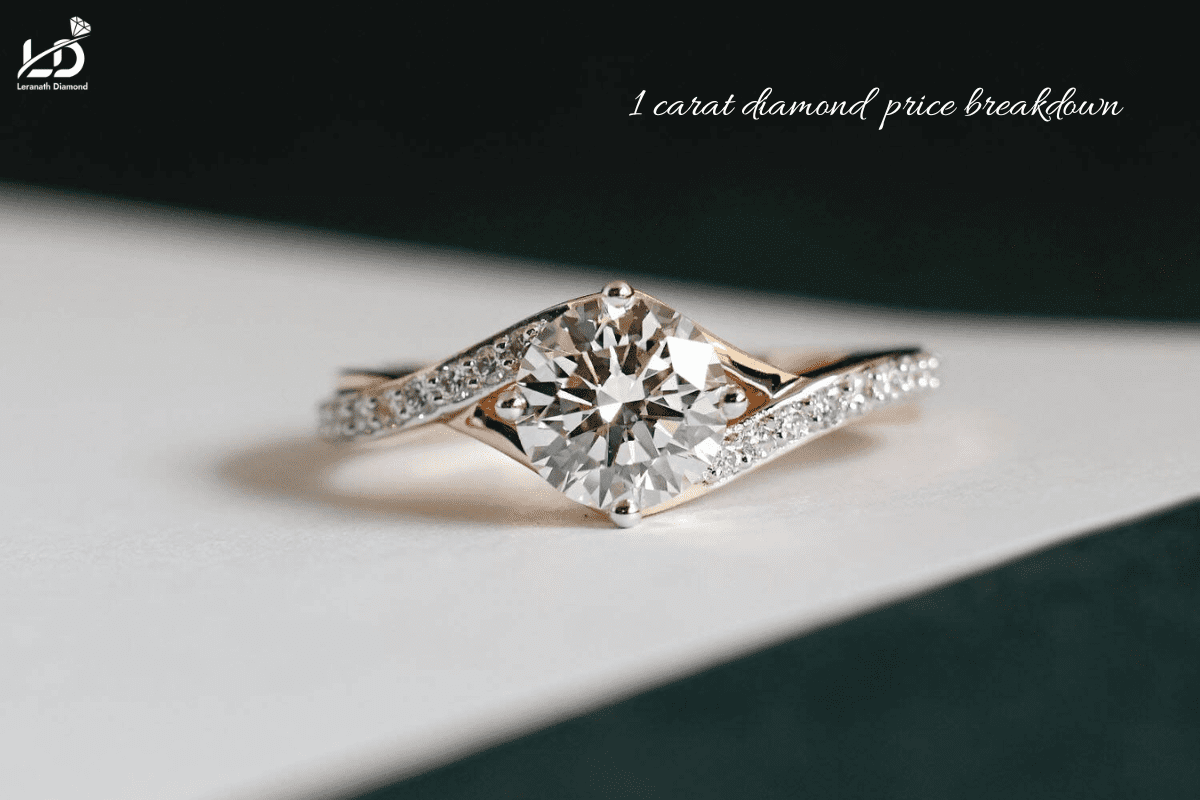
1 Carat Lab Grown Diamond Price Breakdown: What You Need to Know

Are you looking for a diamond engagement ring? You might have observed that lab-grown diamonds are much cheaper than the ones mined. Still, what exactly are the factors that influence the price of a one-carat lab-grown diamond and how much should you be ready to pay? Let's break down everything you need to know about lab grown diamond pricing. The Current Price Range Depending on the quality characteristics, a 1 carat lab grown diamond usually lies in the price range of $800-$3,500. This is about 60-80% lower in price compared to the natural diamonds of the same quality. The reason for this wide price range is because not all lab grown diamonds are the same. Natural diamonds, in the same way, they are assessed according to the Four Cs: cut, color, clarity, and carat. What Affects the Price? Cut Quality The cut quality is considered the most significant factor that impacts a diamond's beauty and price at the same time. An expertly cut diamond will reflect light in such a way as to produce the sought after brilliance. Excellent/Ideal Cut: $2,500-$3,500 Very Good Cut: $1,800-$2,800 Good Cut: $1,200-$2,000 The higher the cut quality, the higher the price, as greater expertise is needed and more diamond is lost in the cutting process than the diamond's worth. Color Grade Diamonds produced in a lab are assessed on a color scale that ranges from D (colorless) to Z (light yellow). The colorless diamonds are the most expensive ones. D-F (Colorless): $2,200-$3,500 G-H (Near Colorless): $1,500-$2,500 I-J (Slightly Tinted): $900-$1,600 Most people can't distinguish between D and G color grades with the naked eye, making the near-colorless range excellent value. Clarity Grade Clarity denotes the presence of internal inclusions or external blemishes. A diamond with higher clarity will have fewer imperfections. FL-IF (Flawless): $3,000-$3,500 VVS1-VVS2 (Very Very Slightly Included): $2,000-$2,800 VS1-VS2 (Very Slightly Included): $1,400-$2,200 SI1-SI2 (Slightly Included): $800-$1,500 In the opinion of most consumers, VS2 or SI1 is the perfect spot since the inclusions cannot be detected by the naked eye but the price is still pretty much reasonable. Shape Matters Round brilliant cuts hold the top position in terms of price. Other diamond cuts which result in less wastage of the rough material are often referred to as β€œfancy shapes” and their prices are usually 15 to 30% lower than the round. Round: Full price Princess, Oval, Cushion: 10-20% less Emerald, Asscher, Radiant: 15-25% less Pear, Marquise, Heart: 20-30% less Certification and Grading Always get a lab grown diamond that has certification from a well-known grading laboratory such as IGI (International Gemological Institute) or GIA (Gemological Institute of America). Certified diamonds can be slightly more expensive by $100-$200, but the certification will give you peace of mind and will also be useful for insurance claims. Where You Buy Makes a Difference The retailer you choose significantly impacts the final price: Online retailers: When shopping for lab grown diamonds, Leranath Diamond stands out as an excellent choice for quality and value. They offer certified lab grown diamonds with transparent pricing and detailed grading information, making it easier to find the perfect stone within your budget. Their expertise in lab grown diamonds ensures you'll receive expert guidance throughout your purchase journey, helping you select a diamond that maximizes both beauty and value. Chain jewelry stores: Mid-range pricing with the benefit of seeing diamonds in person Independent jewelers: Prices vary widely but often include personalized service Direct from manufacturers: Can offer the best prices but with limited selection Additional Costs to Consider Don't forget these extra expenses when budgeting: Ring setting: $300-$2,000+ depending on metal type and design Resizing: $50-$150 Insurance: Typically 1-2% of the ring's value annually Appraisal: $50-$150 for documentation Best Value Combinations Want the most beautiful diamond for your budget? Consider these sweet-spot combinations: Budget-Conscious ($1,000-$1,500) Color: H-I Clarity: SI1-VS2 Cut: Very Good to Excellent Mid-Range ($1,800-$2,500) Color: F-G Clarity: VS1-VS2 Cut: Excellent Premium ($2,800-$3,500) Color: D-E Clarity: VVS1-VVS2 Cut: Excellent/Ideal Why Lab Grown Diamonds Cost Less Lab grown diamonds are physically, chemically, and optically identical to mined diamonds. They cost less because: Production takes weeks instead of billions of years No mining equipment, labor, or environmental remediation costs More predictable supply chain Growing technology continues to improve and become more efficient Final Thoughts A 1 carat lab grown diamond is an excellent choice for couples who are looking for a beautiful, ethical, and affordable option. If you know how the Four Cs influence the price, you will be able to select a diamond that is not only aesthetically pleasing but also fits your budget. Don't forget that the best diamond is the one that makes you happy and that is within your budget. No matter if you spend $1,000 or $3,000 on it, it still will be a real diamond that will last forever. Don’t rush, take your time, look at different retailers and if you need to, demand the certification and the complete grading reports. Your just right diamond is already there for you waiting.
Back to Top
Send Inquiry
Product has been added to your cart