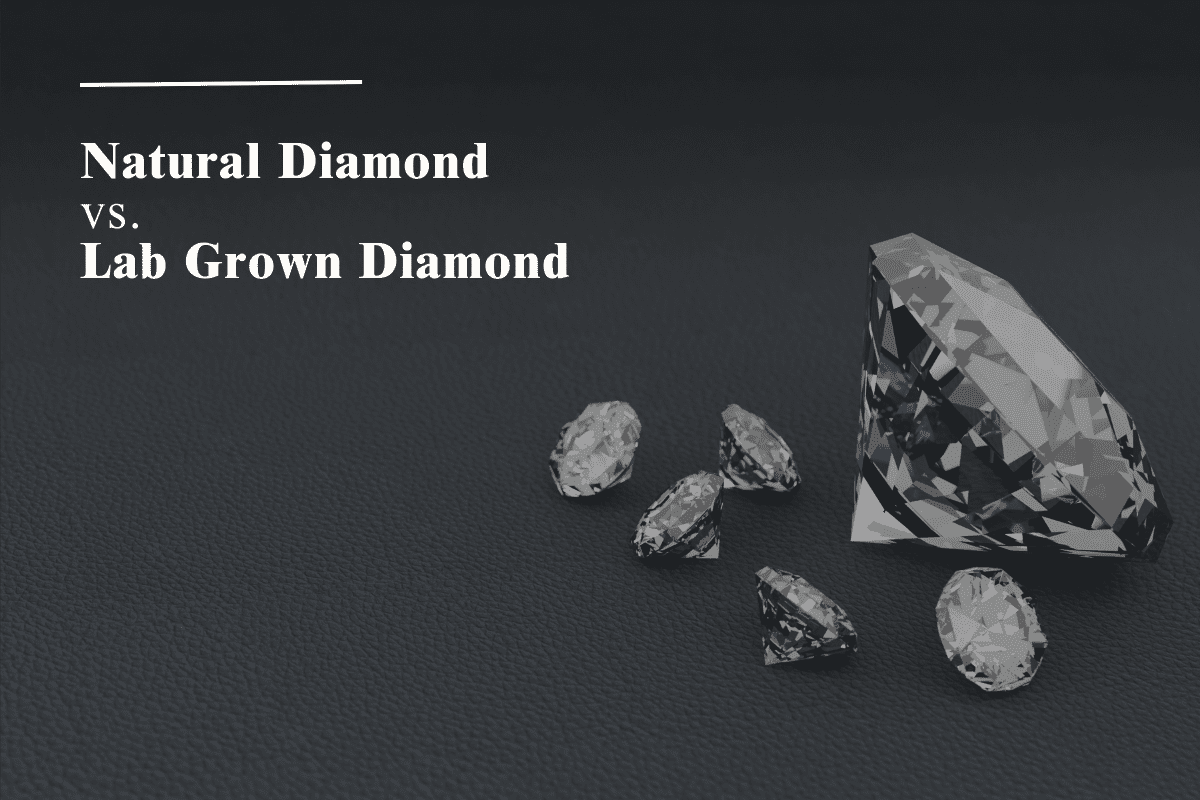
Lab Grown Diamonds VS Natural Diamonds

Lab-Grown vs. Natural Diamonds: A Closer Look at the Differences

Diamonds have long been a symbol of love, luxury, and timeless beauty. But today, shoppers face a new dilemma: Should you choose a natural diamond formed deep within the Earth or a lab-grown diamond created in a matter of weeks? Both sparkle, both dazzle, and both are marketed as "real" diamonds—but they're not the same. Let's break down the differences in plain terms to help you decide which diamond is right for you. What Are Natural Diamonds? Natural diamonds are the masterpieces of nature. Created between 1 and 3 billion years ago at intense temperatures and pressures in the Earth's mantle, they emerge onto the Earth's surface via volcanic activity. They are then mined, cut, polished, and fashioned into the beautiful pieces of jewelry we cherish. Interesting Facts: Age: Older than dinosaurs. Well, literally!Rarity: Only a tiny fraction of the total diamonds mined is of gem quality. Mining Impact: Traditional diamond mining can disrupt ecosystems and has been linked to ethical concerns (e.g., "blood diamonds"). What Are Lab-Grown Diamonds? Lab-grown diamonds are real diamonds—just made in a lab instead of the Earth. Scientists replicate the natural diamond-growing process using two main methods: HPHT (High-Pressure High-Temperature): Mimics Earth's conditions using intense pressure and heat.CVD (Chemical Vapor Deposition): Using carbon-rich gas to "grow" diamonds layer by layer on a seed crystal. These are chemically, physically, and optically the same as natural diamonds. The only difference? Their origin. Key Facts: Speed: Takes 6–12 weeks to make.Cost: 30–50% cheaper than natural diamonds.Sustainability: While they market these as being green, it does not change the fact that it is an incredible amount of energy usage in a lab. Lab-Grown vs. Natural Diamonds: What's the Difference? Compare them side by side: FactorNatural DiamondsLab-Grown DiamondsOriginFormed in Earth’s mantle.Created in a lab.CostHigher due to rarity.More affordable.Environmental ImpactMining affects land and water.Lower footprint, but energy-intensive.Resale ValueHolds value better.Depreciates faster.EthicsRisk of conflict sourcing.Typically conflict-free. Do They Look Different? Nope! Even connoisseurs need specialized equipment to differentiate between the two. Both are graded under the same 4Cs (Cut, Color, Clarity, Carat). Lab-grown diamonds can even reach higher clarity grades because they are grown in controlled environments. Myth Busted: Lab-grown diamonds are not "fake." They're 100% carbon, just like diamonds mined from nature. Ethical and Environmental Factors Natural Diamonds Mining can cause deforestation and soil erosion.Can lead to water pollution as well."Blood diamonds," Kimberley Process attempts to address, but some loopholes have been found to exist. Lab-Grown Diamonds No mining needed.Typically, laboratories rely on a non-renewable source of energy, (e.g. coal in other countries).Judgment: generally more ethical for lab-grown diamonds, except when it relies on non-sustainable energy source. Why Is There a Price Gap? Lab-grown diamonds skip the billion-year wait and mining costs, making them cheaper. A 1-carat natural diamond might cost between $1,800 - $15,000 & lab grown diamond cost might between $300-$1500. The cost of a diamond depends upon the color, cut, shape, and quality on the whole. But: Natural diamonds retain value over time, while lab-grown diamonds lose resale value quickly (think tech gadgets vs. heirlooms). Which Should You Choose? Your decision depends on your priorities: Choose Natural Diamonds If: You value rarity and tradition. You want a long-term investment. You're drawn to Earth's natural history. Choose Lab-Grown Diamonds If: Budget is an issue. Ethics and sustainability are important to you. You want a bigger stone for your money. How to Not Get Ripped Off Ask for Certification: Both types should have a grading report (e.g., GIA, IGI).Check for Inscriptions: Many lab-grown diamonds have a small laser inscription (e.g., "Lab-Grown").Buy from Reputable Sellers: Research brands with transparent policies. At Leranath Diamond, we are a reputable diamond supplier known for quality and trust. We specialize in making customized diamonds according to your requirement, which will make every piece perfect. Final Thoughts There is no "better" diamond—only what's better for you. Natural diamonds are about romance and rarity, while lab-grown diamonds are about affordability and innovation. Whether you propose, treat yourself, or mark a momentous occasion, the right diamond lets you wear a symbol of strength and beauty. Ask Yourself: Do you want a piece of Earth's history or a marvel of modern science?
CVD vs HPHT Diamond

CVD & HPHT Diamonds: A Simple Guide to Lab-Grown Diamond Differences

What Are Lab-Grown Diamonds? Lab-grown diamonds are real diamonds created in controlled laboratory environments instead of being mined from the earth. They share the same physical, chemical, and optical properties as natural diamonds but are produced using advanced technology.  The two widely used techniques include Chemical Vapor Deposition (CVD) and High-Pressure High-Temperature (HPHT). Why choose lab-grown? Ethical: No mining or environmental harm.Affordable: Typically 30–50% cheaper than natural diamonds.Customizable: Scientists can control size, color, and quality. Understanding the CVD Process CVD (Chemical Vapor Deposition) diamonds are created in a vacuum chamber filled with a carbon-rich gas, such as methane. The process involves the following steps:Seed Placement: A thin diamond seed is positioned in a low-pressure chamber.Gas Introduction: Methane (CH₄) and hydrogen (H₂) gases are introduced at 20–30 kPa.Ionization: Microwaves heat the gas to 800–1200°C, ionizing it into plasma and breaking bonds to release carbon atoms.Layer Formation: Carbon atoms deposit on the seed at ~0.1–10 µm/hour, forming a square/rectangular diamond over 2–4 weeksPost-Growth Treatments: Annealing (1200–1600°C) or irradiation enhances color (e.g., removing brown tints) and clarity. Understanding the HPHT Process HPHT (High-Pressure High-Temperature) diamonds are created by mimicking the extreme conditions under which natural diamonds form. The process involves:Graphite Placement: A carbon source (usually graphite) is placed into a press with a gem seed.Extreme Conditions: The press applies intense pressure (about 1.5 million psi) and heat (over 2,000°C).Formation: Under these conditions, the graphite dissolves and recrystallizes around the seed, forming a diamond. HPHT diamonds often have a slightly yellowish or brown tint but can be treated to improve color. Understand Through Table FeatureCVD DiamondsHPHT DiamondsGrowth ProcessLayered carbon deposition in a vacuum chamberHigh pressure and temperature mimicking Earth's conditionsGrowth ShapeGrows in square or rectangular shapeGrows in cuboctahedral shapeGrowth TimeWeeksFew days of weekPost-Growth TreatmentOften needed for color improvementSometimes needed for color enhancement Properties Difference Between CVD & HPHT PropertiesCVD DiamondsHPHT DiamondsColorOften near-colorless; may have slight brown/gray tints (removed via post-treatment)More likely to be colorless (D-F grades)ClarityFewer inclusions (higher clarity grades)May have metallic inclusions from the growth processBrillianceExcellent; identical to natural diamondsSlightly more fire due to crystal structurePost-Growth TreatmentOften treated to improve colorRarely needs treatmentCostUsually cheaperSlightly more expensive Choosing Between CVD and HPHT Diamonds: Which Is Better for You? When deciding between CVD (Chemical Vapor Deposition) and HPHT (High Pressure High Temperature) lab-grown diamonds, the “better” choice depends on your priorities, budget, and preferences. Both methods produce stunning, ethical diamonds, but their differences matter depending on what you value most. CVD Diamonds: Clarity and Affordability If you’re seeking high clarity on a budget, CVD diamonds are a standout choice. The gas-based growth process minimizes inclusions (internal flaws), often resulting in diamonds graded VS or higher. While some CVD diamonds start with a faint brown or gray tint, post-growth treatments easily enhance their color to near-colorless grades (G-J). They’re also typically 10–20% cheaper than HPHT diamonds, making them ideal for cost-conscious buyers who want a larger carat size without compromising sparkle. Choose CVD if: You prioritize clarity and affordability.You’re okay with post-growth treatments.You want a sustainable option with moderate energy use. HPHT Diamonds: Color and Purity If colorless perfection is the aim, then HPHT diamonds are the ticket. They're grown to approximate Earth's natural diamond-forming conditions, which often result in D-F color grades (completely colorless) without needing treatments. It's also well-suited to producing vibrant fancy-colored diamonds with trace elements introduced during growth; for example, blue or yellow. However, metallic inclusions from the press can slightly compromise clarity, but these flaws are rarely visible to the naked eye without magnification. HPHT diamonds cost a bit more, as the process is energy-intensive.Choose HPHT if: You want a colorless or fancy-colored pearl.You prefer minimal post-growth treatments.You’re willing to pay a premium for natural-like purity. The Verdict For engagement rings or everyday jewelry, both types are equally durable (10/10 hardness) and indistinguishable from natural diamonds to the naked eye. Your decision boils down to: Budget : CVD wins for affordability.Color : HPHT excels in colorless grades.Clarity : CVD often has fewer inclusions. If ethics and sustainability matter the most, both are excellent choices. Personally speaking, I will lean towards CVD for clarity and value; however, if you desire an absolutely flawless colorless gem, HPHT would be worth that investment. It is always necessary to check those certifications - be it GIA or IGI - and make your sparkle truly shine with a priority.
CVD Diamond Guide

CVD Diamonds: All You Should Know Before Buying

What are CVD diamonds ? A CVD diamond, or Chemical Vapor Deposition diamond, is a lab-grown diamond created in a laboratory using carbon-rich gases. Man-made, yet chemically, physically, and optically the same as natural diamonds, these diamonds are so identical to natural diamonds that even experts need special equipment to tell them apart. While the HPHT produces diamonds through simulating natural processes of diamond formation, extreme pressure, and heat, the CVD is a process in which diamonds grow layer by layer inside a vacuum chamber. However, CVDs are generally perceived to be inferior in quality as compared to HPHTs since they have a higher possibility of defects. Despite this, many people do seek CVD because they can opt for an ethically sourced, eco-friendly, and highly affordable form of diamond when considering jewelry with something that does not closely match in comparison to the higher quality that a HPHT presents. Here's a Little About the Short History of CVD Diamonds In 1954, General Electric created the first CVD diamonds in a process that grows diamonds layer by layer in a vacuum chamber. This procedure is very different from HPHT, the technique discovered earlier, which holds a diamond at extreme pressure and heat to produce synthetic diamonds. Although HPHT diamonds may be of superior quality, industries primarily used CVD diamonds. In 2003, scientists perfected CVD technology to create the first gem-quality diamond that can be used as jewelry. Being of better color and clarity than the older natural diamonds, the CVD-made diamonds are far more affordable, ethical, though still considered lower in quality than HPHT diamonds. CVD Diamond Properties The physical, chemical, and optical properties of CVD diamond are the same as natural diamond. Pure carbon atoms arrange themselves in a crystal lattice structure, giving CVD diamonds the same hardness (10 on the Mohs scale) and brilliance. Like natural diamonds, CVD diamonds remain unaffected by acids or other chemicals, which makes them incredibly durable and resistant to corrosion. Growers can cultivate them with fewer impurities, and they are available in a range of colors and sizes. While they offer the same sparkle and strength, CVD diamonds are more affordable and environmentally friendly because they grow in a laboratory. Properties of CVD Diamonds: Chemical Composition : The same as natural diamonds - they arrange carbon atoms in crystal structure.Clarity : Tends to contain fewer inclusions compared to the same natural diamonds.Color : Colorless, near colorless, blue, pink, and yellow - or any color the customer requestsSize and Shape : Any size and shape - customized.Sustainability : More eco-friendly because no mining is necessary.Cost : Usually cheaper than natural diamondsDurability : Since acid or other chemicals do not affect them, they are highly resistant to corrosion. How Are CVD Diamonds Manufactured? Step-by-step descriptions of how CVD diamonds are manufactured are as follows:- Seed Selection : A vacuum chamber holds a thin slice of natural diamond (referred to as a seed). Gas Introduction :A carbon-rich gas, usually methane, enters the chamber. Ionization: Microwaves or lasers ionize the gas into plasma, breaking down the gas molecules and releasing carbon atoms. Diamond Growth : The carbon atoms deposit onto the diamond seed, layer after layer, for weeks, forming a diamond crystal. Post Treatment : The diamond may receive HPHT treatments to improve its color and clarity. Difference between CVD & HTPT diamonds CVD and HPHT stand out as two of the very commonly used techniques for producing lab-grown diamonds, each featuring distinct characteristics and production processes. While they both yield diamonds chemically similar to those of their earth-mined counterparts, their production and resulting product go in very different ways. Production Process: CVD : They deposit carbon-rich gases in a vacuum chamber on atoms of carbon through a diamond seed layer by layer to form a diamond. HPHT : Similarly, scientists simulate the process of formation in nature by applying extreme pressure of around 5-6 GPa and extremely high temperature ranging from 1,300–1,600°C to make a diamond. Quality : CVD Diamonds: Tend to have fewer inclusions, but may contain slight imperfections compared to HPHT diamonds. Lower quality in terms of clarity and brilliance, when compared to HPHT diamonds. HPHT Diamonds: This means higher clarity and fewer inclusions due to the strength of pressure and heat used in creating them. Color: CVD Diamonds: They usually range from colorless to near-colorless (D to J) and jewelers can create them in fancy colors such as blue, pink, and yellow. HPHT Diamonds: Generally produce diamonds with better color and clarity, especially in the D to G range, and also come in fancy colors. Cost: CVD Diamonds: Usually more affordable than HPHT diamonds, making them a great choice for budget-conscious buyers. HPHT diamonds: Generally, such a process and its high energy content typically make it cost more because they are more complex compared to the next. Sustainability Both are more earth-friendly than mined stones, but many consider CVD diamonds somewhat more so due to their comparatively low energy output versus HPHT. Both CVD and HPHT diamonds are great substitutes for mined diamonds. CVD diamonds are relatively more affordable and eco-friendly, while HPHT diamonds often possess higher quality with better color and clarity. It all depends on your budget, desired quality, and ethical considerations. Is a CVD Diamond the Right Choice for You? If you’re looking for an ethical, affordable, and high-quality alternative to natural diamonds, a CVD diamond could be the perfect choice. CVD diamond are chemically identical to natural diamond, offering the same brilliance, durability, and hardness, but at a significantly lower price. Scientists create them in a lab with fewer resources and without the environmental impact of mining, making them a more sustainable option. For those who are concerned about sustainability and would like to stay within budget, CVD diamonds are an excellent balance of quality and price. However, if you are looking for the ultimate clarity and quality, then you may opt for HPHT diamonds because they are typically free of more inclusions and thus better in terms of overall clarity. In fact, it really comes down to your personal preference, budget, and what's most important: sourcing an ethically responsible diamond. CVD diamonds are excellent for a very impressive, environmentally friendly diamond at a much more budget-friendly price point. Important Considerations Before Purchasing CVD Diamonds Certification : Ensure that the diamond is certified by a reputable gemological organization for authenticity and quality. Color and Clarity : Look at the color (D to J) and clarity (SI1 to VS1) of the diamond for maximum visual appeal. Cut Quality : A well-cut diamond will make the diamond shine bright and sparkle well. Price Comparison : Compare prices to find the balance between quality and affordability. Resale Value : Consider the potential resale value because CVD diamond will have a lower resale price than natural diamond.
CVD Rough Diamond manufacturers in Surat

CVD Rough Diamond manufacturers in Surat

Leranath Diamonds is a leading CVD rough diamond manufacturer. They also supply a range of synthetic diamonds, including powder, rough diamonds, and polished diamonds. We are the reputed CVD Rough Diamond manufacturers in Surat. We have built an extremely advanced and well-equipped infrastructure unit. Our industrial unit is well-equipped with all the required tools and machines. We offer a wide range of CVD rough diamonds. We are a supplier, manufacturer, and wholesaler of lab-grown diamonds. Leranath diamond offer a range of lab-grown diamonds, including CVD rough diamonds, rough-raw CVD diamonds, and rough and polished loose lab-grown diamonds. Our mentor founded CVD Rough diamond manufacturers, Leranath Diamonds, many years ago under visionary direction. Our best team and dedicated commitment support our proficiency in this field.  Get CVD diamond, Lab-grown Diamond, Diamonds manufacturer. Our deep commitment to ethical practices made it eco-friendly to the globe. What this means to you as a customer is an assurance that our diamonds are authentic and properly represented. Leranath Diamonds is one of the leading CVD Rough Diamond manufacturers in Surat. We have recruited our team of professionals after considering their previous working experiences and domain knowledge. We are capable of delivering products on time and safely to customers'premises. Our well-connected distribution network enables us to establish a commendable niche in the market. Leranath Diamonds, a prominent organization engaged in Manufacturing and Wholesaler optimum quality Lab Grown Diamond, Loose Natural Diamond, CVD Diamonds, and much more. We manufacture the offered products using sophisticated technology and high-grade raw material as per the set quality standards. Customers highly acknowledge these diamonds for features such as sturdy design, precise finish, corrosion resistance, accurate dimension, and easy installation. Besides, customers can gain the offered products from us in various specifications at reasonable prices. CVD diamond growth is comparatively slow for rough diamonds. This is because molecules move at a rate of around 0.1 - 10 microns per hour, forming a diamond film in almost an hour.. Accordingly, it takes few weeks to grow a single crystal diamond using a diamond seed. At Leranath Diamonds, one of the leading CVD Rough diamond manufacturers in Surat, we create lab-grown diamonds using low energy process with the aim to keep the earth safe from mining impact and presenting a diamond that is Eco Friendly, Green & Clean. These objectives include fulfilling the increasing demand for diamonds in the jewelry industry and establishing effortless supply chain management with customers.
Best Synthetic Diamond Manufacturers in Surat

Best Synthetic Diamond Manufacturers in Surat

Leranath Diamonds is the largest manufacturer of natural diamonds in Surat. They are the best synthetic diamond manufacturers in the city. They set benchmarks for quality, accuracy, and variety, and incorporate technology, manufacturing, and social responsibility. Our Profile brilliance and sparkle change your look with style. Leranath Diamonds delivers real beauty with high purity diamonds. Leranath Diamonds is a leading synthetic diamond manufacturer in Surat. They offer a diverse collection of natural and CVD diamonds. In addition, we also provide valuable solutions of Diamond Powders and Cutting Wheels to bring a positive and productive change to your businesses. Also, we provide the whole product line in a wide range of colours and finishes to help clients attain the individual style and look they desire. We are the best synthetic diamond manufacturers in Surat. Today's giant started with modest beginnings. Rapid growth followed its establishment, with diamond manufacturing operations beginning and steady expansion continuing in India. The readiness to evolve and adapt to a changing environment drives success in business. Leranath is the best synthetic diamond manufacturer in Surat because of its deeply rooted philosophical outlook and way of life. This makes it, consequently, the best choice for customers who are therefore seeking high-quality diamonds. Trust, integrity, and ethics, therefore, are the cornerstones of the setup that Leranath Diamonds has established Leranath Diamonds, one of the best synthetic diamond manufacturers in Surat, has its offices, trading, and manufacturing units in Surat.The Group has specialized manufacturing units. The Group is the largest user of progressive hi-tech manufacturing systems in the diamond industry. We manufacture and export both fancies and rounds in all shapes, clarities, colours, and sizes from the smallest up to 3.00 carats. The ability to offer the broadest range of polished goods, and also deliver the highest standards on every front has helped us build long-term relationships. Today 90% of our clients are repeat customers, for whom Leranath Diamonds, one of the best synthetic diamond manufacturers in Surat. A global leader status is held by Leranath Diamonds because of its commitment to excellence. This commitment reflects the focus on matching scale with superior technology and delivering both quantity and quality. Leranath Diamonds Lab Grown Diamonds is an emerging name in the synthetic diamond industry. One of the best synthetic diamond manufacturers in Surat. Leranath Diamonds envisioned a future where, ultimately, CVD diamonds would be a staple in every household; thus, making these lab-grown gems accessible to the masses. Leranath has emerged as a leading global authority in the field of synthetic diamond detection technology research. We provide automatic detection solutions at every price point & strengthen the diamond industry at every stage of the supply chain. We provide low-cost, scalable solutions, integrating technology and business innovation alongside efficient customer support. Our offering minimizes human error, facilitates trust, increases productivity, and most importantly, enables customers to make an informed & secure purchase. To recognize the man-made creation and lead the global market with its exclusive quality and perfect synthetic diamonds. Leranath Diamonds is a leading synthetic diamond manufacturer in Surat. Their innovative technology and research are known for allowing them to create perfect diamonds. We create every diamond with great favor and fidelity; consequently, this enables you on a journey to perpetuity.
Back to Top
Send Inquiry
Product has been added to your cart