
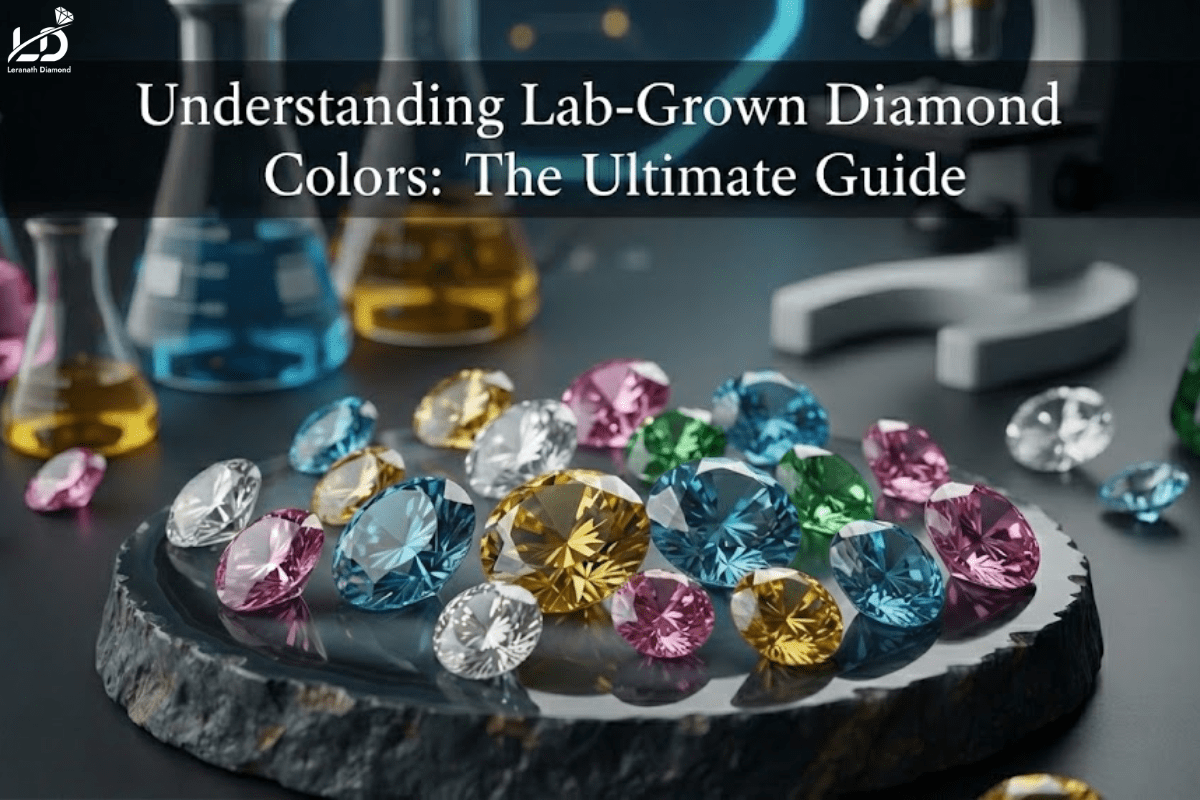
Understanding Lab-Grown Diamond Colors: The Ultimate Guide
When buying lab-grown diamonds, colour is one of the biggest influences on both the look and the price. Knowing how colour works with lab-grown diamonds can help you find the right diamond whether you want a classic white diamond or an eye-catching fancy coloured diamond.
What Are Lab-Grown Diamonds?
Lab-grown diamonds are actual diamonds manufactured in laboratories where diamond conditions are artificially created. Lab-grown diamonds have the same properties as natural diamonds: the same chemical composition, the same crystal shape, and the same optical properties. The only difference is that a natural diamond takes millions to billions of years to form, whereas lab-grown diamonds develop within weeks via advanced technology.
The Color Grading Scale
Most people think of diamonds as colorless, but they actually come in a range of shades. The Gemological Institute of America (GIA) grades white diamonds on a scale from D to Z.
D-F (Colorless): White diamonds grades D-F are considered colourless, and are considered the rarest and most expensive type of diamond because they are completely void of any colour. Even an expert gemologist would have difficulty identifying the slight colour difference between D, E, and F grades when the stones are viewed individually.
G-J (Near Colorless): These stones have slight traces of color that are difficult to detect with the naked eye, especially when set in jewelry. They offer excellent value because the color difference is minimal but the price drop is significant.
K-M (Faint Color): Warm tinting begins to show in some instances, and this can often be the most preferred coloration by consumers compared to the grades above K-M.
N-Z (Very Light to Light Color): Light yellows and light browns are visible in these shapes, but do not tend to be selected as "Engagement Rings" and they generally have a lower price than those of higher grades.
How Lab-Grown Diamonds Get Their Color
The color in diamonds comes from trace elements or structural changes during formation.
iamonds created in laboratories may exhibit colored hues that occur in two manners: either naturally from incorporating nitrogen atoms during their formation, or purposefully created by controlling the various chemical elements present for growth.
For white diamonds, producers use special purification techniques to minimize nitrogen and other impurities that cause color. The better they control the environment, the more colorless the resulting diamond.
Fancy Colored Lab-Grown Diamonds
In addition to the typical D-Z diamond grading system, fancy colored diamonds are graded according to their intensity and purity, such as vivid blue, pink, yellow, green, and even red.
Yellow Diamonds: Nitrogen is present when yellow diamonds are formed, so lab-made yellow diamonds are more prevalent and less expensive than other shades.
Blue Diamonds: When boron is introduced to the growth process, blue diamonds are formed. Lab-grown blue diamonds are gorgeous and more readily available than natural blue diamonds, which are extremely difficult to locate.
Pink Diamonds: Natural pink diamonds are one of the most elusive of all precious stones, so the lab-grown variety is immensely appealing because they can be produced either by treating the stone after growth or during the growth process.
Green Diamonds: Green diamonds can be produced by exposing them to controlled doses of radiation throughout the growth cycle or after the growth process has finished. The shades of green can vary from light mint to dark forest green.
Red and Orange Diamonds: Rarely, orange and red diamonds occur in nature; however, because of technological advances in growing conditions and treatment techniques, red and orange diamonds can be produced in a controlled environment.
Choosing the Right Color for You
Your choice should balance personal preference, budget, and the setting you plan to use.
For engagement rings with white metal settings like platinum or white gold, aim for at least H-I color. Higher grades won't show much visible difference, but lower grades may display a yellowish tint against the bright metal.
If you're using yellow or rose gold, you can comfortably choose J-K colors or even lower. The warm metal actually complements the diamond's warmth, making the color less noticeable.
Size matters too. Compared to lesser diamonds, larger diamonds exhibit color more readily. If you're buying a stone over two carats, consider moving up one or two color grades.
The Price Advantage
One of the biggest benefits of lab-grown diamonds is the price difference across color grades. You can often afford to move up several color grades compared to natural diamonds for the same budget.
A near-colorless lab-grown diamond might cost the same as a faint-color natural diamond. This means you can prioritize getting a truly colorless stone without breaking the bank, or choose to allocate your budget toward size or clarity instead.
Color vs. Other Quality Factors
Remember that color is just one of the "Four Cs"- cut, color, clarity, and carat weight. A well-cut diamond with slightly lower color can appear more brilliant than a poorly cut diamond with perfect color.
The diamond's cut dictates how light passes through it, producing fire and glitter. Many experts argue that cut quality matters more than color grade for overall beauty. A diamond with excellent proportions will maximize brilliance and can make subtle color variations virtually invisible.
Common Misconceptions
Myth: Lab diamonds are all perfectly colorless. Reality: Lab-grown diamonds come in the same color range as natural diamonds. Creating truly colorless diamonds requires sophisticated control and purification techniques.
Myth: Color doesn't matter if the diamond sparkles. Reality: While sparkle is important, color affects the overall appearance, especially in larger stones or white metal settings.
Myth: Fancy colored lab diamonds are "fake" colors. Reality: The color in fancy lab-grown diamonds comes from the same causes as in natural diamonds—trace elements and structural characteristics.
Making Your Decision
Start by looking at several diamonds in your target color range. See them in person if possible, or request high-quality photos and videos from online retailers. Your eyes are the best judge of what looks good to you.
Consider your setting and lifestyle. Will you wear your diamond daily? What metal color do you prefer? How important is size versus absolute perfection?
Set a realistic budget that accounts for all the quality factors you care about. Lab-grown diamonds give you flexibility to maximize what matters most to you without compromising on what you can afford.
Final Thoughts
Understanding diamond color helps you make an informed choice that balances beauty, quality, and value. Lab-grown diamonds offer an opportunity to get excellent color grades at accessible prices, or to explore fancy colors that would be prohibitively expensive in natural stones.
The perfect diamond is the one that makes you happy when you look at it. Whether that's a pristine colorless stone or a vibrant fancy color, lab-grown technology makes it easier than ever to find exactly what you want.