
Choosing Between Natural and Manmade Diamonds: A Buyer’s Guide

Throughout history, diamonds have held a special place in human culture. They symbolize commitment, rarity, and permanence. But the jewelry market has transformed. Today's shoppers have an option that didn't exist a generation ago: gemstones grown in facilities versus those extracted from the earth. The two types of diamonds are both real. They are both stunning and durable, exhibiting the same characteristics. But there are also differences in terms of the story behind them, the price, and the influence-so when you recognize these differences, it will be easier for you to choose the one that matches your values and needs. How Two Very Different Diamonds Form The origin of a diamond fundamentally shapes its identity and character. Natural Diamonds re obtained from the deep crust of the Earth. Over a period of approximately three billion years, intense pressure and extremely high temperatures convert carbon into crystal structures under the Earth's crust. Then, geological activity brings these stones closer to the surface where they are found and extracted. Each diamond mined from this process has been around for a long timeβ€”it is a geological specimen that was formed long before humans inhabited the earth. Laboratory-Created Diamonds are produced through various high-tech approaches that imitate the natural process. In specialized laboratories, researchers take carbon materials and apply precise heat and pressure, resulting in diamond formation in a matter of weeks or months. Instead of relying on nature for the slow process of geological transformation, this method uses technology to speed it up and thus mimic nature's work, but only in a much shorter span of time. Is a Lab-Created Diamond Actually a Diamond? Absolutely, without question. From the perspective of science, the diamonds produced in labs and the diamonds obtained from the earth cannot be chemically differentiated. The atomic structure of both the diamonds is composed of carbon atoms arranged in the same way. They have the same hardness, refractive index, and other optical qualities. They are, indeed, equivalent gemstones to the naked eye and under normal jewelry testing. The sole significant difference is the place where they come from. Synthetic diamonds relate to mined diamonds just as manufactured steel relates to naturally mined iron ore. In both cases, it is the same element - carbon - that they are produced from, with the same physical properties, but they just happened to come by different routes. Professional gemologists, as well, are unable to tell a lab diamond from a natural diamond if relying solely on visual inspection. Only the use of specialized laboratory equipment can uncover the very minute growth markers or internal features that indicate the diamond's technological lineage. Side-by-Side Comparison Understanding the practical differences helps clarify which option suits your situation. AspectNatural DiamondLab-Created DiamondCreation ProcessNatural geological formation over billions of yearsTechnological synthesis in laboratory setting, weeks to monthsMaterial CompositionPure carbon crystalline structurePure carbon crystalline structureCostHigher price pointGenerally 40-70% less expensive for equivalent specificationsInvestment PotentialEstablished resale market with some value retentionLimited secondary market, minimal investment returnEnvironmental FootprintMining operations have significant land and ecosystem impactsLower mining impact but substantial energy consumptionDurabilityExtremely hard and scratch-resistantIdentical hardness and durability The most obvious distinction is cost. A laboratory-created diamond of equivalent size and quality typically costs substantially less, allowing buyers to either save money or allocate their budget toward a larger or higher-quality stone. Making Your Decision: Which Type Fits Your Needs? The right choice depends entirely on what matters most to you personally. Consider a Natural Diamond if: You are intrigued by the tale of rarity through geological processes. The thought that your diamond was formed in the earth's core millions of years ago, went through the volcanic processes and time still carries with it a great deal of resonance for you. You give priority to the traditional way of investment and the possibility of appreciation. The physical market image and the historical importance belonging to diamonds from the ground are your preferences. To your decision making, the fact that the "Earth-sourced" stones are genuine is a very important point. Consider a Lab-Created Diamond if: Your most crucial aim is to get the best quality and the biggest stone possible within your budget. You are not afraid to sacrifice the investment aspect for the sake of the visual effect. You are worried about the mining methods and their impact on nature. The scientific miracle of producing diamonds is something that you find intellectually appealing. You consider the economical aspect-getting more diamond for less price-more important than the historical Final Thoughts Whether you select a diamond that emerged from Earth's depths or one synthesized in a modern facility, you're acquiring a genuine, brilliant, durable gemstone. Your decision reflects your values, financial situation, and what a diamond means to you personally. The key is making an informed choice. Purchase from a jeweler who provides transparent documentation about your diamond's origin and specifications. Whether your stone is mined or laboratory-created, proper certification ensures you understand exactly what you're acquiring and can shop with confidence. Your perfect diamond is waitingβ€”choose the one that aligns with what matters most to you.
Moissanite

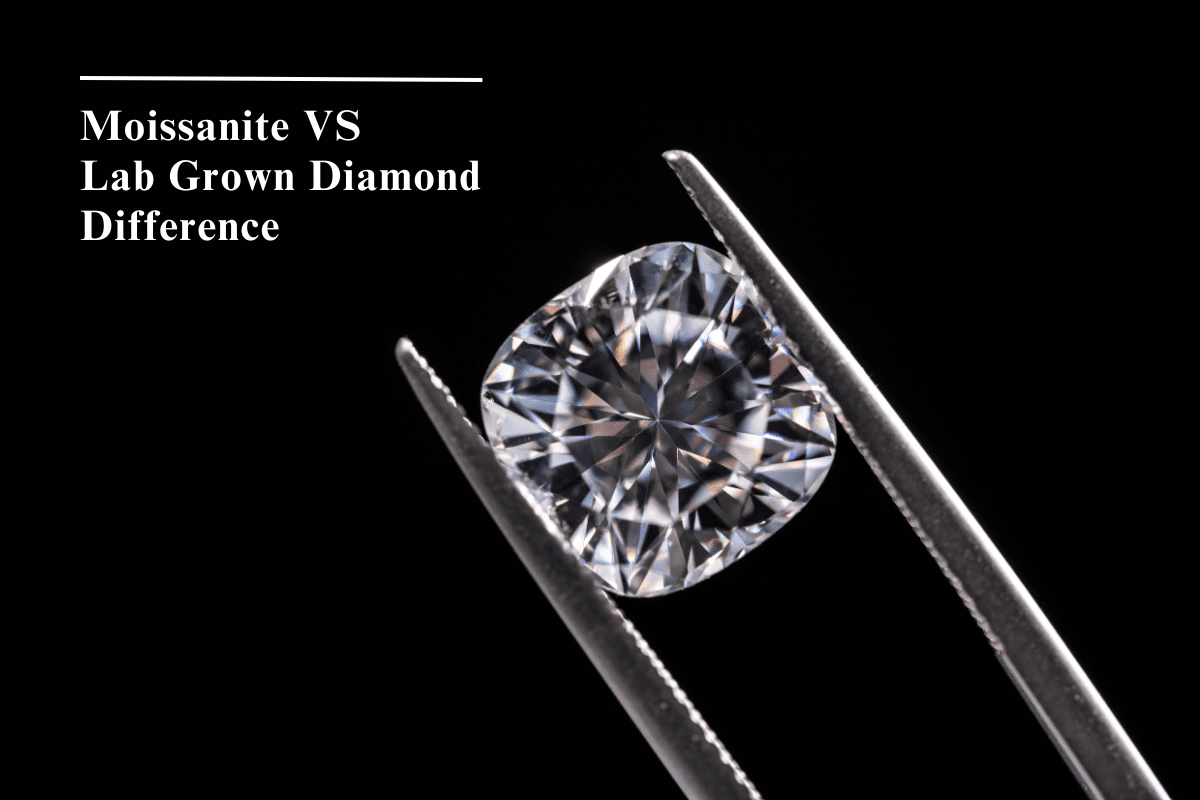
Moissanite vs Lab-Grown Diamond: A Comprehensive Guide

Finding the right gemstone for any jewelry as per the desire is downright overwhelming. A discussion on moissanite versus lab-grown diamonds comes into the picture many times. Beautiful, ethical, and priced lower than natural diamonds-those two share a lot in common but in many ways are quite apart. We take a closer look at moissanite versus lab-grown diamonds: the characteristics, similarities and differences, and how to select one for yourselves! What is Moissanite? Moissanite is a gemstone discovered in 1893 by the French scientist Henri Moissan in a meteor crater. He initially thought he had found diamonds before realizing he had discovered a new mineral, silicon carbide. Because natural moissanite is extremely rare, most of the moissanite that is used in jewelry today is lab-created. Moissanite is known for its brilliance and fire, which speaks of its ability to disperse light into colorful flashings. The hardness on the Mohs scale for a diamond is approximately 10, while that for moissanite is approximately 9.25. This means that moissanite can be a very brilliant gemstone in its own right with a dazzling sparkle brightening its form due to its high dispersion and high refractive index. Is Moissanite Lab-Grown? Yes, the moissanite that one buys at jewelry stores today is lab-created. The reason lab-created moissanite exists is that very rare natural moissanite has been created by scientists in laboratories by highly advanced methods. This method simulates the formation conditions of natural moissanite, resulting in gems chemically, physically, and optically identical to the natural gemstone. Moissanite is an eco-friendly and ethical option since obtainment creates no negative environmental impacts and mining is not involved. Compared to natural diamonds and lab diamonds, moissanite is more affordable, which works greatly in its favor. Moissanite vs Lab-Grown Diamond Both moissanite and lab-grown diamonds are similar in certain areas with respect to the two inaddy much at variance-the major difference between the two: 1. Composition Moissanite: Silicon carbide Lab-Grown Diamond: Pure carbon, exactly like those in natural diamonds. 2. Brilliance and Fire Moissanite: With its great brilliance and fire, it sparkles much better than diamonds. Lab-Grown Diamond: This sapphire is brilliant and fiery like all the other natural diamonds, but sparkles less than moissanite. 3. Hardness Moissanite: 9.25 on the Mohs scale, which makes it very durable, but diamonds are typically harder. Lab-Grown Diamond: Scoring a perfect 10 on the Mohs scale, it also proves to be the hardest known mineral and widely scratch-resistant. 4. Color Moissanite: Generally colorless, but under certain lighting conditions, can also be yellow or greenish. Lab-Grown Diamond: Ranging from colorless to near-colorless and of course with the fancy colors. 5. Price Moissanite: Mostly fitted within students' budgets compared to lab-grown diamonds. Lab-Grown Diamond: Of course, moissanite is costlier compared to that, but it scores a home run compared to natural diamonds. How to Identify Moissanite and Lab-Grown Diamonds It's not easy to distinguish moissanite from lab-grown diamonds; they are exact copies to the naked eye. Here are a few pointers on how to identify the two Sparkle Test: Moissanite exhibits harsher flash varieties in color light (or fire) than that of the white sparkle of diamonds. Thus, if it reflects a rainbow-like reflection, it is more likely moissanite. Magnification: When examined under a jeweler's loupe, moissanite might display double-refraction: you will see double facets; whereas diamonds show single refraction. Professional Testing: The most reliable way of identifying a gem is through professional testing. Jewelers use specialized tools such as thermal and electrical conductivity testers to differentiate between moissanite and diamonds. Which One is Right for You? The choice of moissanite versus lab-grown diamonds always depends on preferences, prices, and priorities. Here are some considerations: Choose Moissanite If: You are looking for a stone with maximum sparkle and fire. You are searching for an inexpensive diamond alternative. You want something that is eco-friendly and ethical. A minor color variance is not a problem in comparison with diamonds. Choose Lab-Grown Diamonds If: You want an excellent gemstone that is chemically and physically the same as natural diamonds. You are prepared to shell out a little extra for the prestige and durability of a diamond. You want something that has the classic look. As an material, hardness and resistance to scratches are of importance in your decision-making. Best Place to Buy Lerenath Diamond is involved in the sale of exquisite lab-grown diamonds as well as custom jewellry pieces that assure their clients of quality, affordability and ethical practices. With over 7 years of excellence in their field, they tailor great designs into the pieces made, from engagement rings to any personalized design that can wear all your styles. By assuring their customers with eco-friendly as well as artistic craftsmanship, they have put every item into combination for the sheer beauty of it. With lab-grown diamonds and custom jewelry just as unique as you are, rely on Lerenath Diamond! Final Thoughts Both moissanite and lab-grown diamonds are fantastic products for anyone who is looking for gemstones that are beautiful, ethical, and affordable. The advantage with moissanite is that it offers incredible sparkle at very reasonable price points, while lab-grown diamonds exemplify the durability and class of all-time diamonds-except for the environmental consequences of mining. At the end of the day, it is all about what you personally want and what attributes conquer in your book. Whichever you choose-Moissanite or lab-grown diamond-you will be happy either way. Good luck with your shopping!
Back to Top
Send Inquiry
Product has been added to your cart